Engineering Challenges in Ground-moving, Mining & Agriculture Machinery


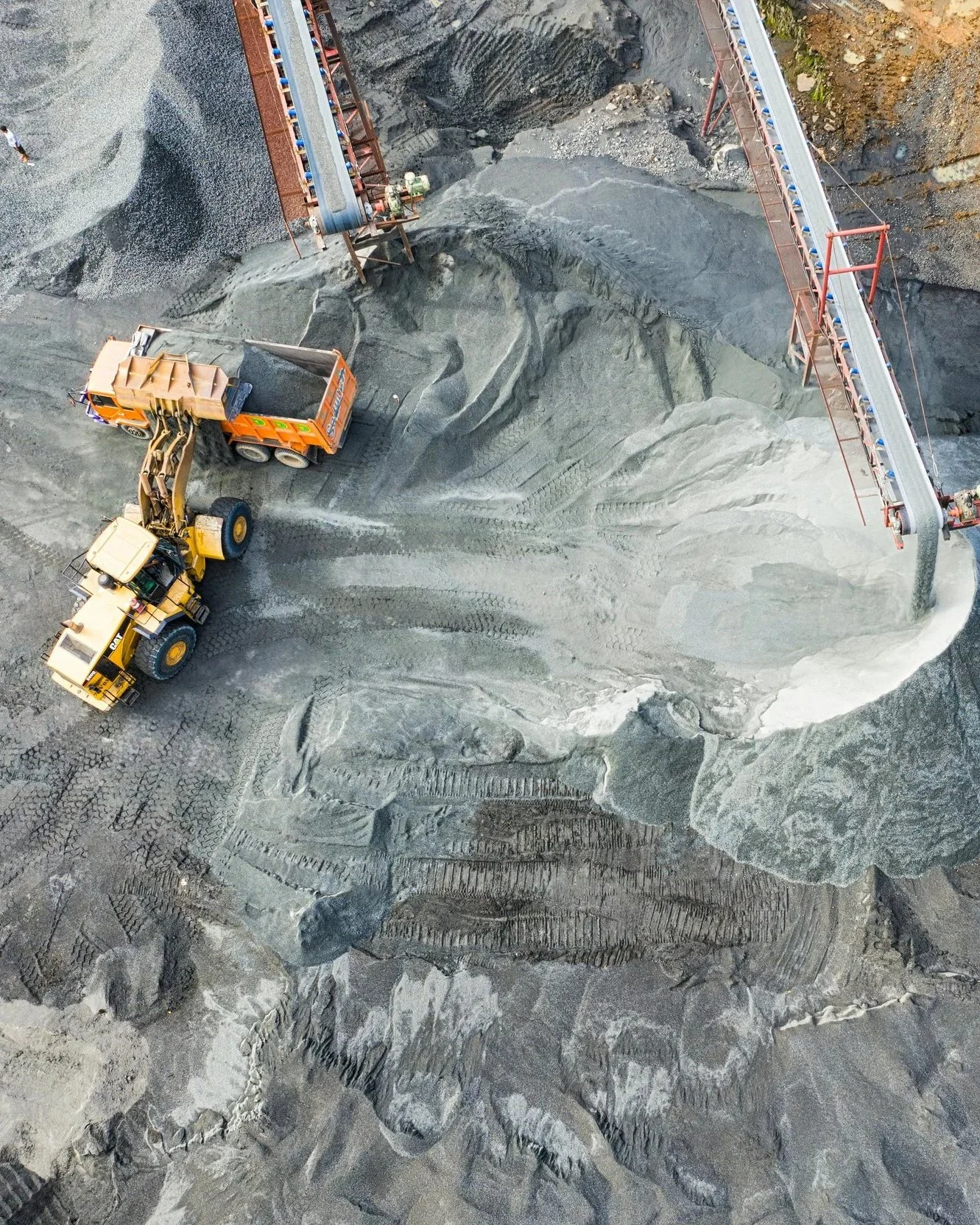
The outlook for the sector of heavy mobile machinery, mining, ground-moving and agriculture indicates continued growth and transformation. Alongside this growth, heavy equipment manufacturers face increasing engineering challenges related to electrification, reliability, emission and quality.

In this context, understanding the structural dynamics and acoustic behaviour of machines has become a critical element of modern product development. Accurate vibration and structural testing on sub-systems and support structures allows engineering teams to validate designs and identify potential failure mechanisms early on. Moreover, it ensures machines delivering the durability, safety and performance which are needed in demanding real-world applications.

Specialized shakers tailored to mining, ground moving and agriculture

Finding an optimal solution with respect to vibration and noise issues on large machines is far from evident- especially where testing is needed since human presence near the critical components in operation is mostly prohibited, whereas large machine operation solely for the purpose of testing is often too expensive.

Using artificial excitation, a significant part of the testing can be shifted away from the operational field and allows for a direct link to CAE models. Experimental modal analysis, transfer path analysis, airborne source quantification, mobility base substructuring, can all provide insight into the sensitivity of the structures, potential of the supports and bearing locations, and isolation of the partitions or encapsulations. Combined with limited operational testing, the dynamic and vibrational loads can be identified, providing validated loads to drive FE models or correlation data for multi-body models.

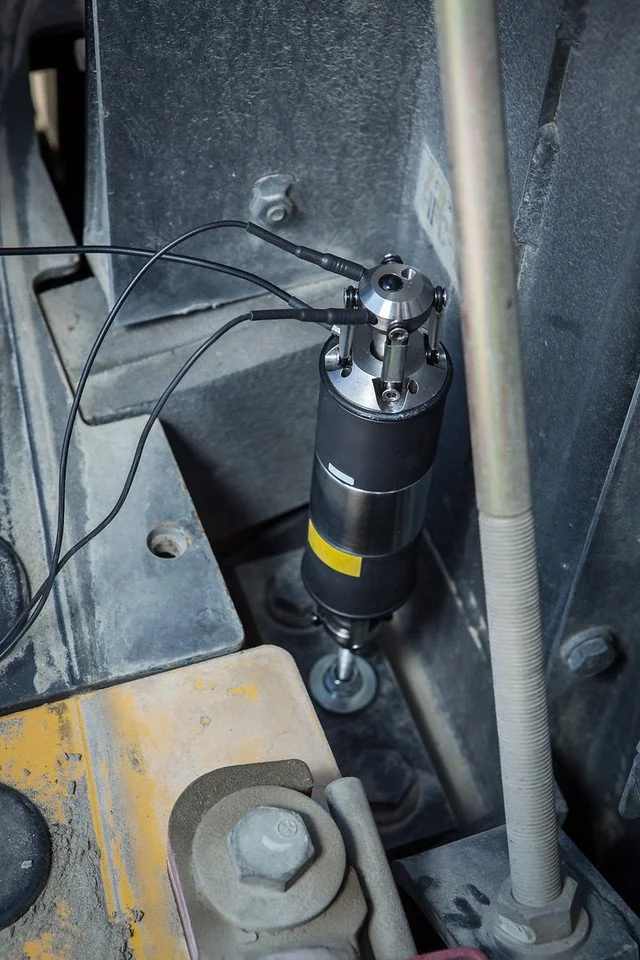
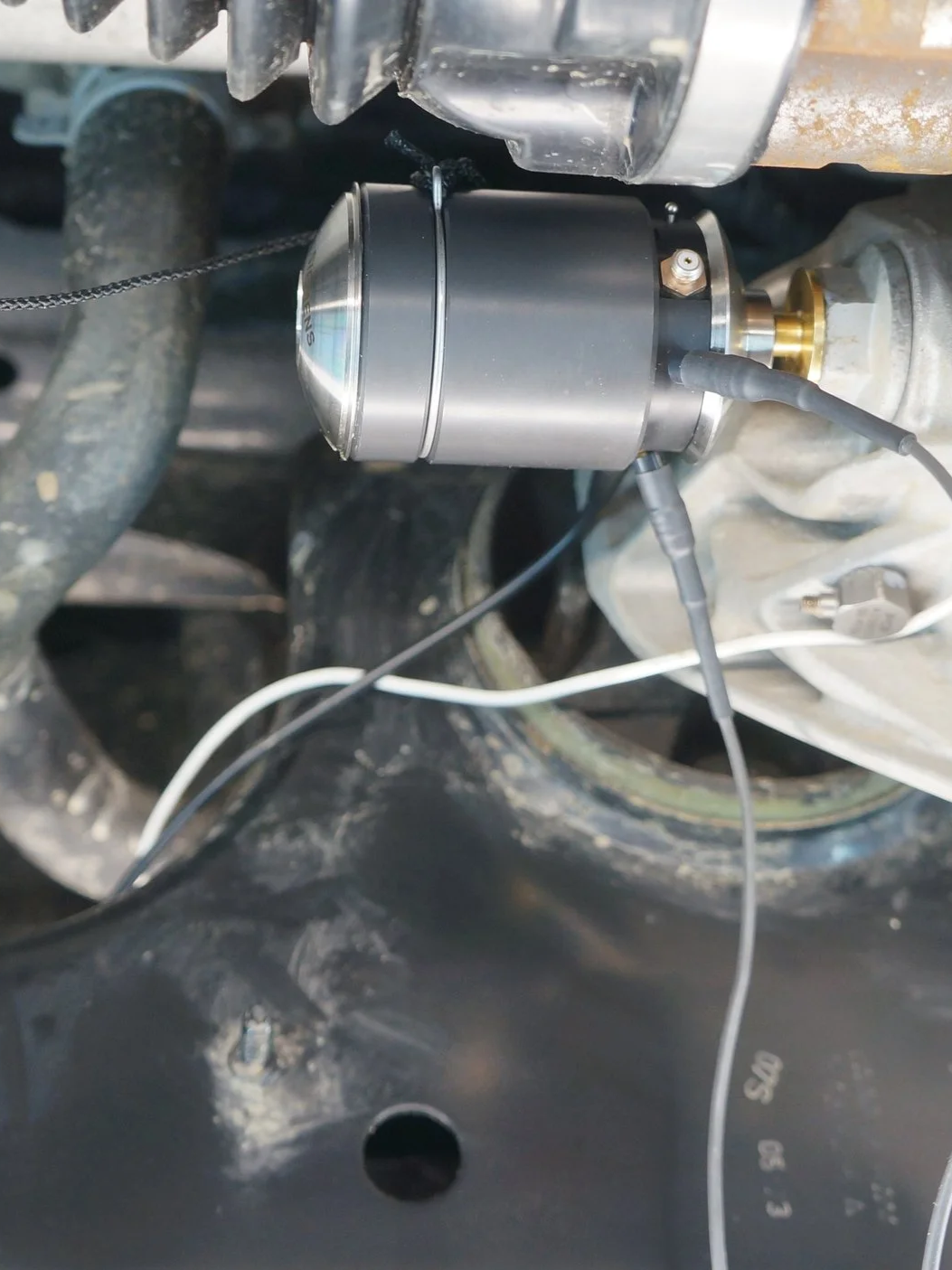
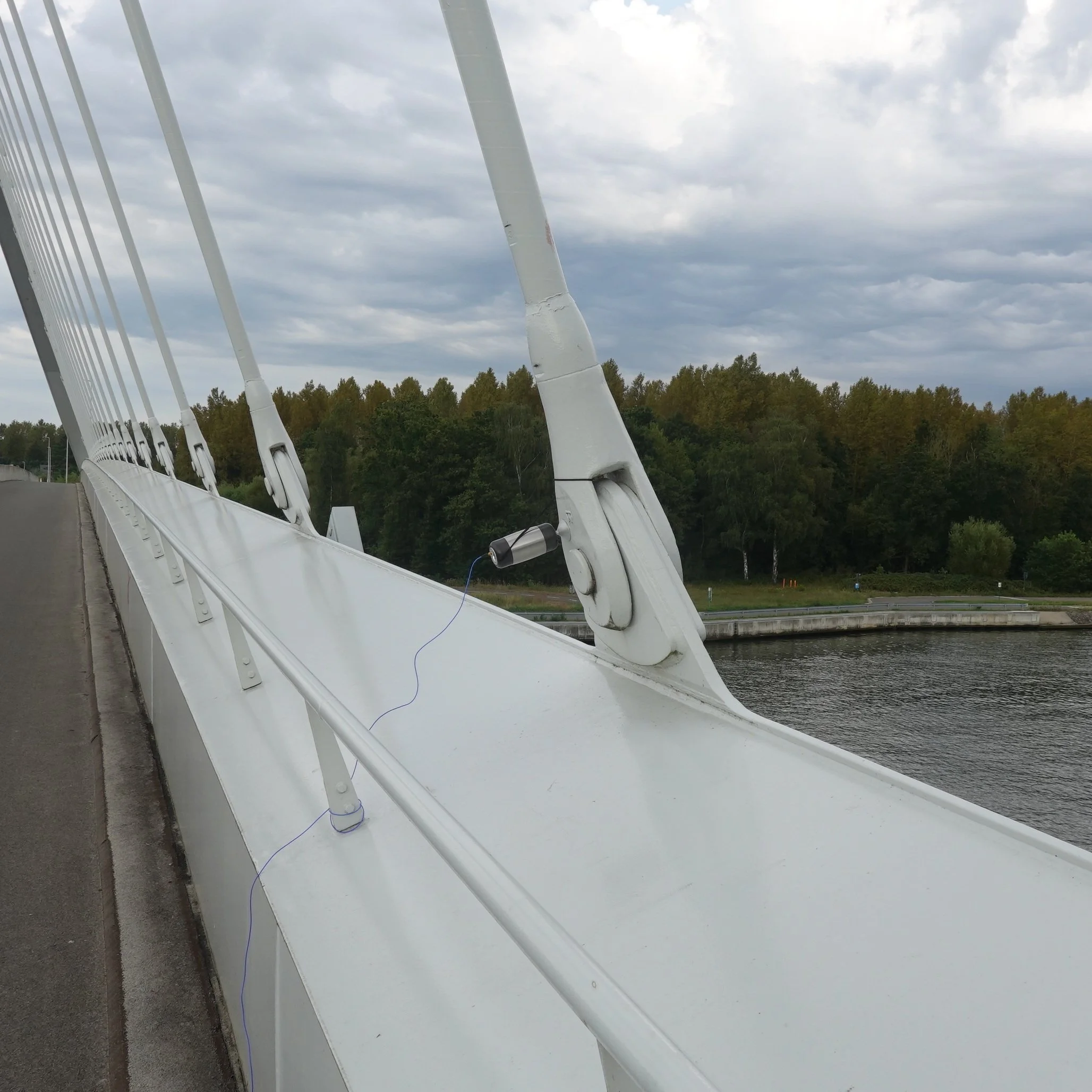
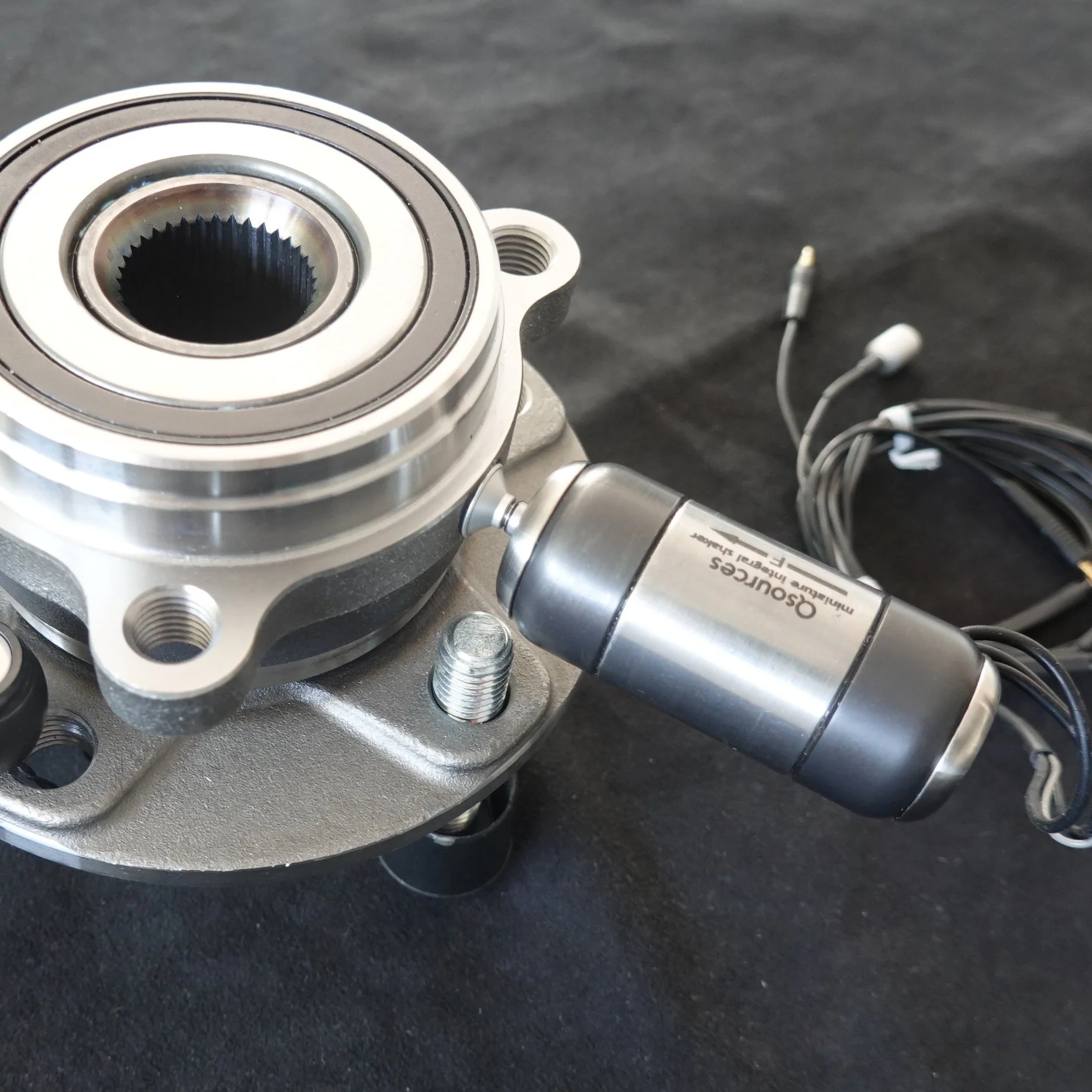
Qsources delivers excitation devices which allow for reliable measurements to obtain critical information, feasible wherever the excitation needs to be applied (working environments included). The point source behaviour and integrated volume acceleration sensing enable comparison with, or direct inclusion into CAE models of the sound field. The extremely compact self-suspending and self-aligning shakers can be used on any inclination and location, and can be applied using structural adhesives for high efficiency in the testing. The main advantage of the high force level integrated Qsources shakers is that there are no external supports needed, nor special fixtures, making it feasible to measure on among others links, beams, scrapers, crunchers, sub-assemblies and on fully assembled machinery.


All quiet at home?


Home is the opportunity for a moment of peace and quiet. Maintaining this peace in apartments and houses is a challenge for manufacturers of comfort- and life-supporting systems. Modern heat pump based heating/cooling systems and devices such as the dishwasher, range hood, coffee machine etc. all risk generating noises and vibrations into the structure of the home.

This challenge is combined with energy efficiency requirements, cost control in a hyper-competitive market and regulations on which materials are allowed. The final sound quality of a product can make its market position stronger, or weaker, simply because complaining customers are much “louder” than the satisfied ones.

Knowledge of the phenomena on the product is essential

Important questions need to be asked. Where are the internal dynamic forces or unstable flow generated? How is this transferred to the outside of the device? And which surfaces on the device actually radiate noise?

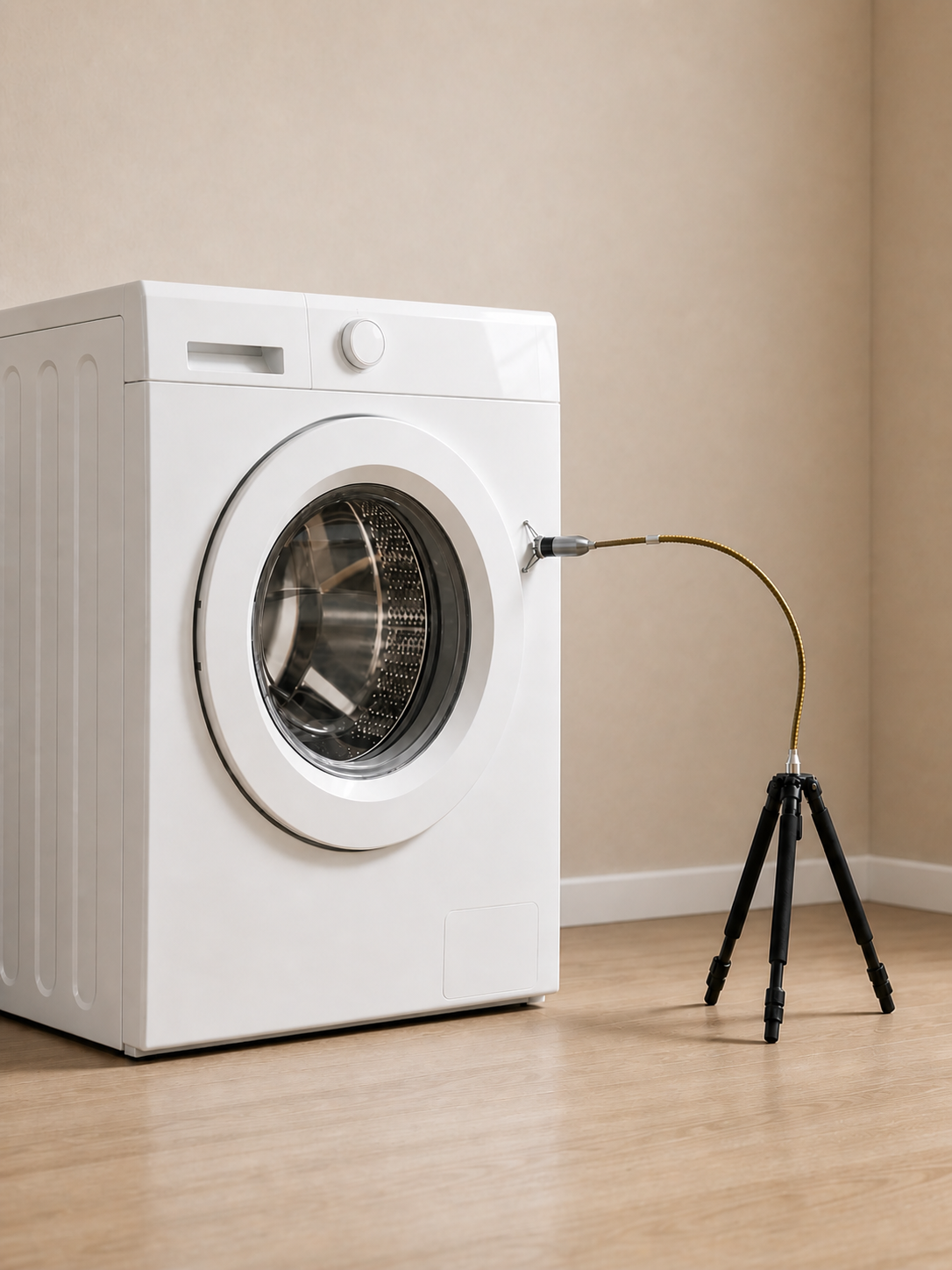
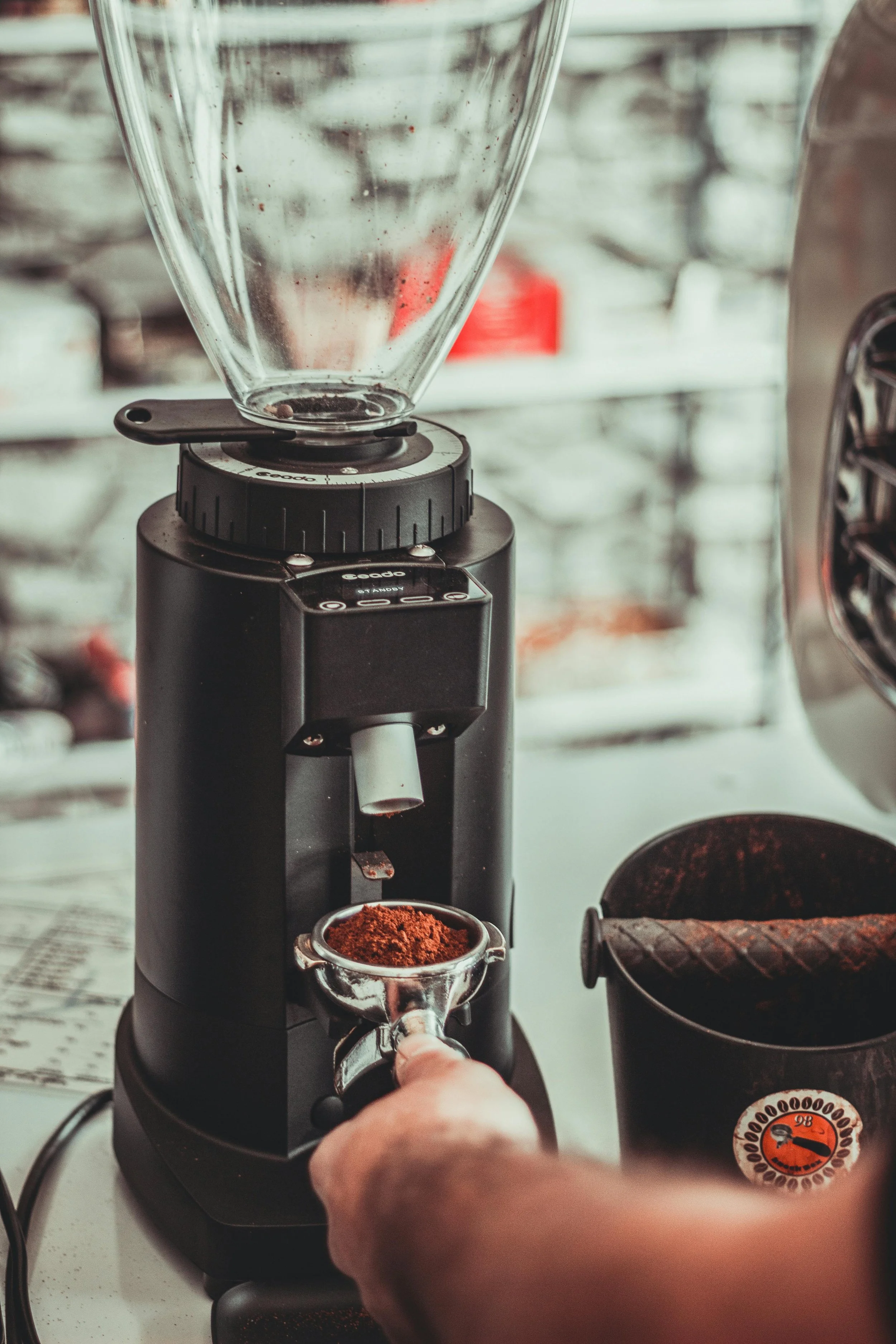
Potentially it’s not the device itself that generates the noise. Vibration at attachment points onto the house (for example for air-conditioning or heat pumps) or the supporting feet (for example a coffee grinder sitting on a kitchen cupboard) can be the dominant source of low-mid frequency noise radiated by large surfaces. What is determining the dynamic forces at the support locations of the device? Can we influence the transfer between the “grinder/pump” and the feet?

With the understanding of these phenomena and their transfer through the entire chain up to the ear of a person (trying to have a rest) it becomes clear where a maximum gain at minimal costs is possible.

For example, should a part of the housing be full of openings to minimize its noise radiation? Or should it be be well closed, and damped, to isolate the part behind it? Can soft feet reduce the vibration leading into the supporting structure? Or will it just shift the machine modes down into the critical rotation frequencies, making it even worse?

There is a range of techniques available to investigate. The measurements and processing can build understanding in the staff, then driving and validating CAE models to assess solutions and modifications.

Multi-microphone and particle velocity scanning in operational condition can give insight into where noise is radiated and in which condition, whereas Experimental Modal Analysis (EMA) can help measuring the structural dynamics of components and assemblies. Not just structural, acoustic modes in cavities and vibro-acoustic coupled modes can be measured too, which can for example clarify where stiffness, mass, or damping is missing.

Transfer path techniques (TPA, ASQ) can be used to estimate the dynamic forces at interfaces or in the drive part (electro motor, pump, grinder or nozzles). Lastly, direct excitation and reciprocal transfer function measurements can show high sensitivity at interfaces or across the machine structure, of excessive radiation sensitivity of some parts.

In this environment, advanced acoustic and structural excitation technologies can play a vital role in supporting R&D teams working on gradual improvement and next generation product development.

Practical and reliable excitation devices

Qsources has developed its dynamically decoupled and compact shakers from the experience of measuring on a large range of objects in labs and on-site, while responding to limitations encountered by alternative excitation solutions. The target is efficient measurement of accurate transfer function data for load identification, modal analysis, energy flow, airborne and structure borne transfer path applications.

Controlled artificial excitation with accurate force signals remains a challenge. Instrumented hammer impacts tend to produce an inaccurate FRF matrix, whereas access in some places might be difficult or even impossible. On the other hand -when possible to use- externally supported shakers with a force cell can cause significant mass loading on lightweight structures, and stinger modes limit the frequency range.

Being far more compact than anything else, self-aligning in any inclination and having a very low coupled mass in the working frequency range has allowed Qsources to extend the scope of inverse load identification limit significantly.


Hybrid Aeronautics, New Noise and Vibration Challenges


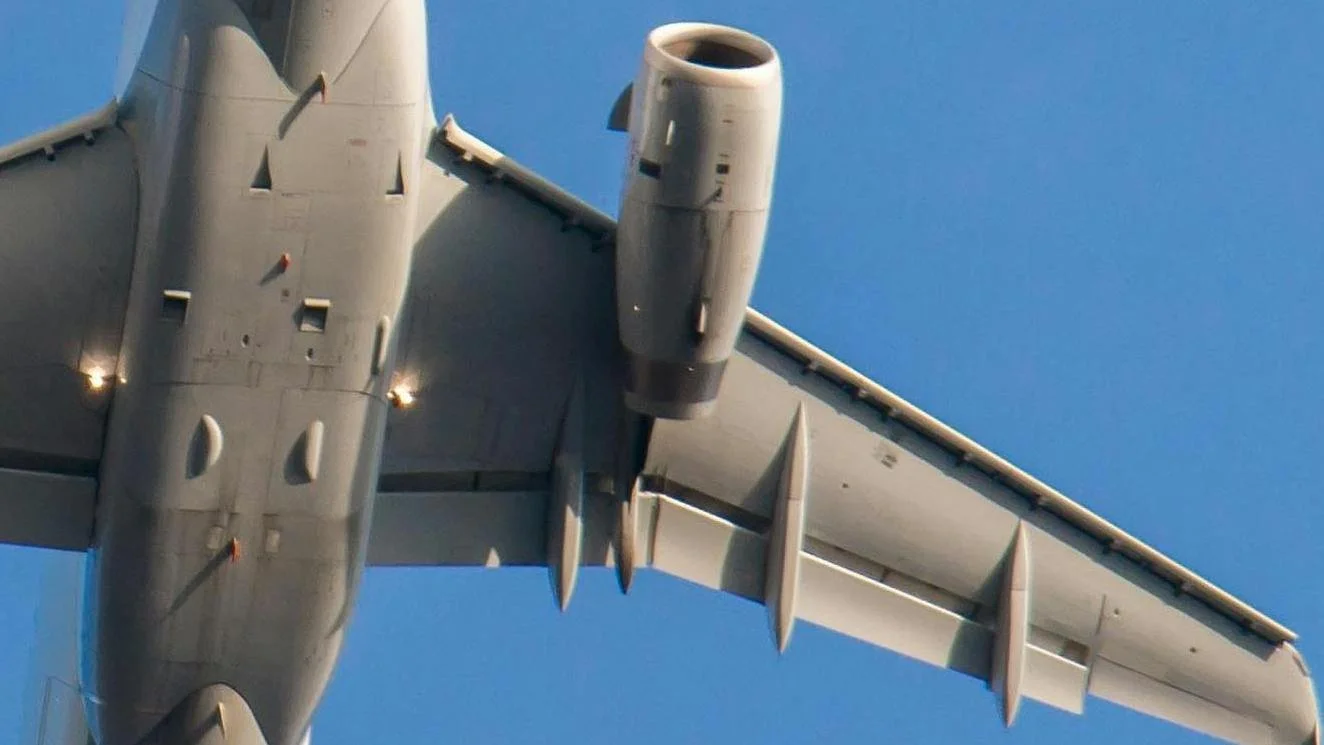
Advanced composite airframes, autonomous platforms, electrified and hydrogen-based propulsion systems, and increasingly stringent noise regulations are reshaping aircraft design, production, and certification requirements. At the same time, ongoing digitalization and AI-driven engineering processes are accelerating development cycles across the industry. These developments introduce new structural and vibro-acoustic challenges that demand more precise analysis of loads and noise contributions under realistic operational conditions. The use of CAE models (Digital Twin) require early-stage model validation. In order for physical validation to keep pace, high reliability acoustic and structural excitation measurements are critical.

Self-supporting shakers and sound sources tailored to aeronautics

Today the major aircraft manufacturers in the world already use Qsources equipment in their research and development centres. Both volume sound sources and the self-aligning and self-suspending shakers are used for multiple purposes such as amongst others exciting landing gears and new carbon structures and optimizing cabin acoustics. They provide more accurate results on lightweight structures, higher data reliability, and their compact size allows for use in small spaces where excitation is needed. Altogether they contribute to the safety, reliability and performance of aeronautics and flight defence systems.

At Qsources we are expanding the portfolio of sound sources and smart shakers to support the needs in the aero industry.

Lightweight Automotive Structures, Heavier Validation Challenges


The automotive sector is undergoing one of the most profound transformations in its history. Electrification, lightweight design, and software-defined vehicle architectures are reshaping development processes while regulatory pressure and cost targets continue to tighten. At the same time, customers expect nothing less than the established high quality standard.


These developments create significant challenges for noise, vibration, dynamics, and structural validation. In electrified platforms, the absence of combustion engine noise exposes previously masked airborne and structure-borne effects. Lightweight mixed-material body structures introduce complex modal behaviour and new coupling phenomena. Shortened development cycles demand earlier and more reliable correlation between simulation and physical testing, with robust and repeatable excitation strategies playing a central role.


To remain competitive, OEMs must ensure precise assessment of the materials, concepts and designs—both in R&D environments and in production-related validation. Computer-Aided Engineering (CAE) models often have become the sole way for choosing the best solutions for the vehicle. Efficient, accurate, well controlled artificial excitation testing and correlation have a vital role in making these CAE models (digital twin) more reliable. It also has an essential role in obtaining well estimated operational vibration loads and airborne sources. And some critical parameters, like damping and interface contact zones in CAE models, depend on testing.

Precise approximation of point sources with well known source strength is the foundation for various airborne and coupled air-structure-fluid borne measurements. Precise directions and minimal interference with the test-object are the basis for structural and structural-air-fluid borne measurements. The follow-up sensing and processing of signals and data are essential too. Qsources’ excitation solutions help make the excitation part efficient and accurate.


Specialized sound sources & shakers tailored to automotive

Qsources has pioneered the development of specialized sound sources and shakers which were first tailored for automotive testing. Driven by the significant efficiency gains they offer during testing and the high reliability of the data they generate, several Qsources’ shakers and sound sources have become the standard in the automotive industry. They are widely utilized in NVH processes such as among others Frequency Response Function (FRF), Experimental Modal Analysis (EMA), modular structure borne and airborne Transfer Path Analysis (TPA) and Frequency response Based Substructuring (FBS) measurements. Since many system suppliers, part suppliers and engineering consultants already use the same Qsources excitation devices, consistent and high-quality data across the entire vehicle development chain is supported.

Newsletter: Small Devices, Big Impact - From Satellite Launches to Building Acoustics


Improving reliability of satellites and their modules

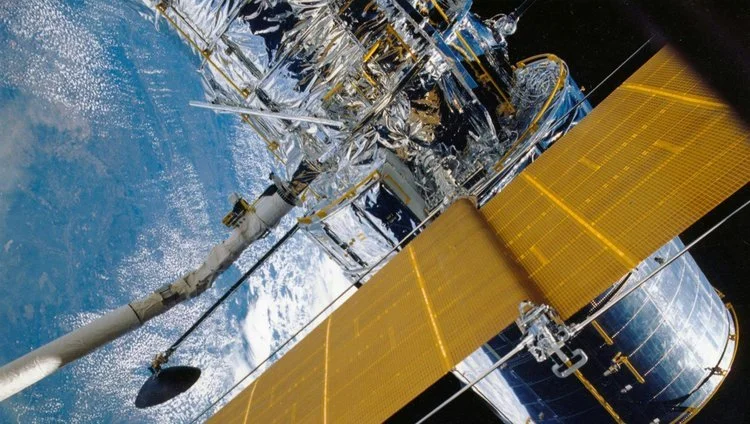
Qsources’ vibration and noise excitation technology supports spacecraft development by improving prediction and qualification test readiness. While satellites in orbit face minimal acoustic or vibration stress, structural elements are subjected to extreme forces during launching. To ensure mission success, engineers perform virtual vibration simulations and validate finite element (FE) models with experimental modal analysis, capturing accurate dynamic behaviour. Qsources’ compact exciters and sound sources deliver precise broadband input and force measurements to obtain reliable frequency response data. This strengthens structural verification, enhances model fidelity, and aids qualification planning—critical for panels, payload structures, and full spacecraft assemblies before formal testing.

Interested to find out how Qsources can support your "space" challenges? Please check out our webpage.


Next generation compact shaker, Massive Impact

The Qsls Suspended Large Shaker from Qsources is a patented structural excitation device. With a weight of just under 3kg, it is intended for large and very large test objects. It self-suspends and self-aligns on the structure, eliminating external supports and alignment work while delivering a flat spectrum with a very high force density up to ~1250 Hz. Easy to install in any orientation and tight spaces, it integrates force sensing and protections for accurate, efficient vibration testing across industries. Want to learn more about the Qsls? Visit our webpage!


Meet you in Dresden?

We will be exhibiting at DAGA 2026 together with Weles acoustics! Organized by the Deutsche Gesellschaft für Akustik (DEGA), DAGA is one of the most important annual conferences for acoustics in Europe. It brings together researchers, engineers, manufacturers, and industry professionals to exchange the latest developments in building acoustics, environmental noise, and measurement technology. This year's edition will be held in Dresden from the 24th until the 26th of March.

During the exhibition, we will show the most accurate solution for building acoustics measurements today: the Qoms2 monopole source. It is an example of how Qsources’ solutions help professionals achieve precise and standards-compliant acoustics measurements.

If you’re attending, we’d be delighted to connect and discuss your measurement challenges. Book a meeting via the contact page on our website.


Qsources is a leading provider of acoustic and excitation solutions. With a focus on high quality and precision, we deliver state-of-the-art products and services to a global clientele, helping them achieve their measurement and analysis goals.

Dimitri Wittevrongel

Business Manager

wittevrongel@qsources.be

+32 13 33 65 64

Explore Advanced Modal Testing Solutions


When testing the vibration behavior of lightweight or suspended structures, choosing the right excitation method can make all the difference. Traditional tools such as electrodynamic shakers and automated modal hammers have long been the standard, but each comes with practical limits —either influencing test results or slowing measurements due to sample movement and repeated impacts.

The Qsources Qlws inertial shaker provides a valuable alternative. It offers a smart combination of speed, accuracy, and ease of use. With its low dynamic mass and self-aligning design, it delivers reliable modal data without disturbing the structure— making it especially valuable for scanning vibrometer measurements.

In the article below, written by our distribution partner Polytec, the Qlws is compared to conventional excitation methods. It describes how the Qlws shaker speeds up testing time, and where it offers the greatest benefits for precise vibration analysis.

Compact Self-Supporting Shakers for Modern Vibration Testing


As vibration testing evolves, a demand arises for tools that are smaller, smarter, and capable of delivering high-quality data without influencing the structure being measured. Traditional shaker systems often require external support, stinger alignment, or add undesired mass to lightweight structures.

Commercial accelerometers, general measurement front-ends, and Polytec's laser scanning systems are now able to detect smaller signals in a reliable way. The combination of these innovations and a significantly higher force to size/weight ratio allow for the use of self-supporting compact shakers for precise structural excitation —even in tight or hard-to-reach locations.

The Qsources Qlws shaker has been advancing the state of the art. The shaker is designed with patented internal suspension allowing for self-alignment. On top, its integrated force sensing and an ultra-light active mass enable accurate vibration measurements with minimal influence on the test object. Ranging from delicate carbon fiber components to full vehicle structures, the Qlws shaker offers reliable excitation across a wide frequency range, eliminating sample sway and alignment challenges which traditionally accompany impact methods.

In the whitepaper below you can explore how this technology improves modal analysis, transfer path studies, simulation correlation, and more —while reducing setup time and technician effort.

Newsletter: Reflecting on the Aachen Acoustics Colloquium: An Inspiring Experience!


We recently had the pleasure of seeing both familiar faces and new contacts at the Aachen Acoustics Colloquium (AAC). This event was engaging, with various presentations on perception, load identification and modular noise and vibration product development. The discussions were interesting and provided valuable feedback on our products and applications. We got enthusiastic responses to the launch of our new Qwis - a wide range integral shaker.

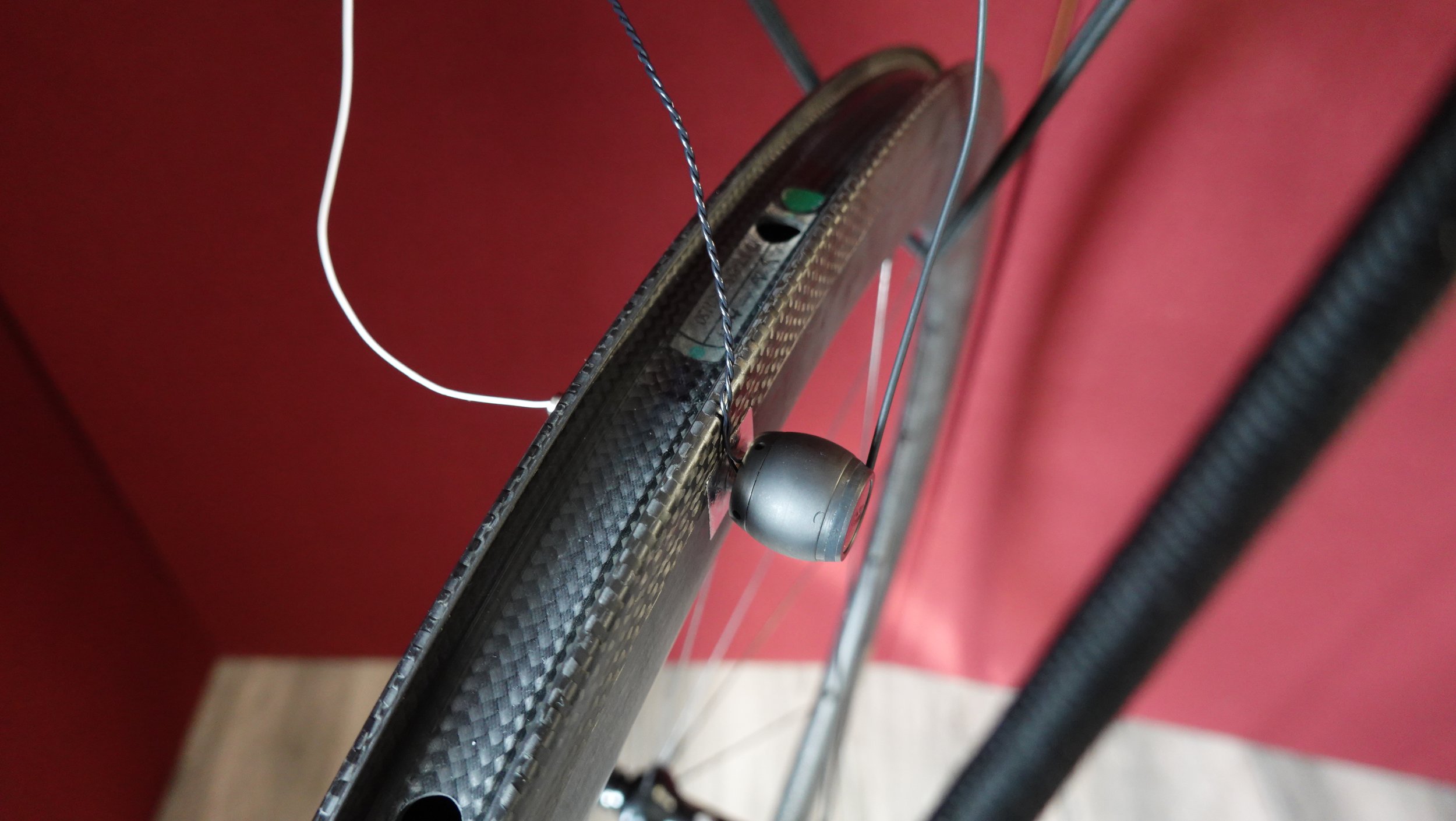
This shaker was also used for the 'Qsources Frequency Test'. In this challenge, where the participants could see the Qwis at work while fiercely vibrating a bicycle, the goal was to estimate the sine frequency by feeling only. It was difficult for everyone. Congratulations to Beray Demirtas, a research assistant at the ika research institute of RWTH Aachen University, for winning the Bluetooth speaker. During the test, we excited the bicycle at 19 Hz, and Beray impressively estimated 18 Hz!


Highlighting Qoms2: Your High Output Monopole for Room Acoustics


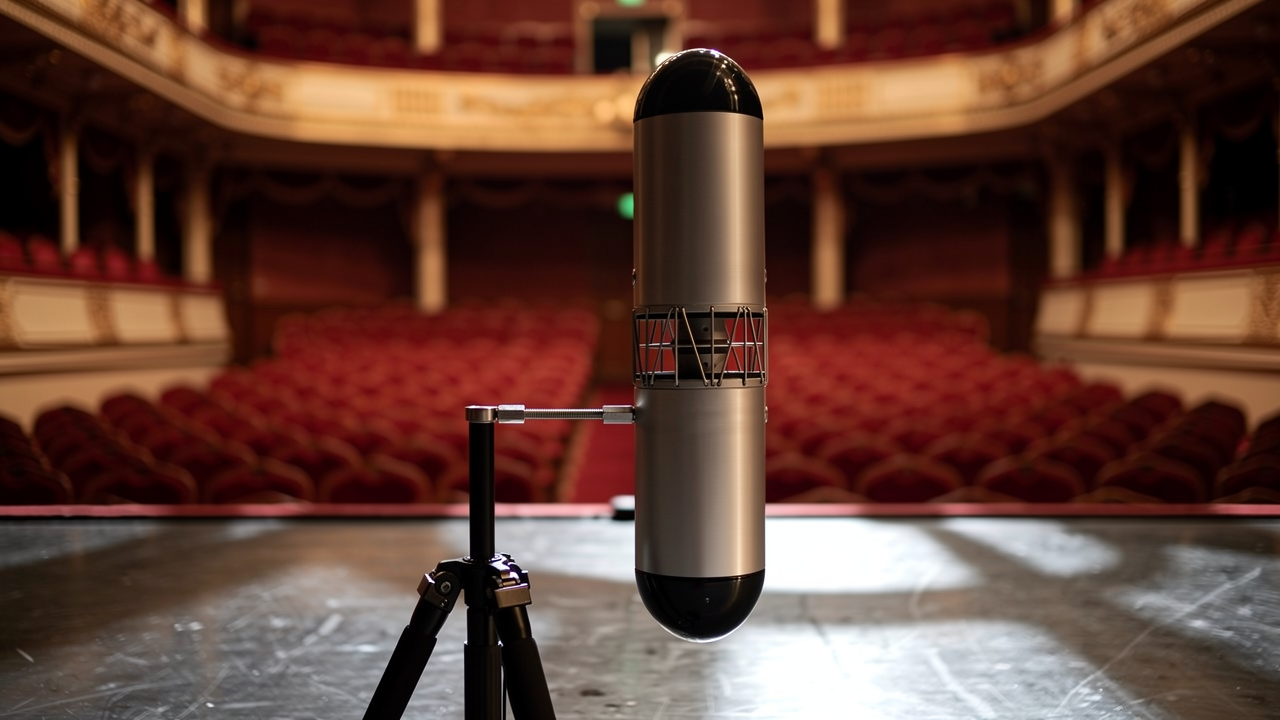
The Qsources Qoms2 sets a new standard for accurate sound sources suitable for room acoustics measurements and applications requiring high sound power levels between 50 and 10,000 Hz. This innovative source enables highly precise room impulse response measurements, Speech Transmission Index (STI), cross space sound transfer, and standard reverberation time measurements. Offering significantly higher accuracy than traditional dodecahedron sound sources and smaller size, the Qoms2 allows engineers and consultants to analyze reflections and acoustic modes in greater depth, aiding in the optimization of theaters, schools, and places of worship for enhanced speech and music experiences. Interested in learning more?


Supporting Clean Energy Solutions with Qsources

The Qsources Qoms2 sets a new standard for accurate sound sources suitable for room acoustics measurements and applications requiring high sound power levels between 50 and 10,000 Hz. This innovative source enables highly precise room impulse response measurements, Speech Transmission Index (STI), cross space sound transfer, and standard reverberation time measurements. Offering significantly higher accuracy than traditional dodecahedron sound sources and smaller size, the Qoms2 allows engineers and consultants to analyze reflections and acoustic modes in greater depth, aiding in the optimization of theaters, schools, and places of worship for enhanced speech and music experiences. Interested in learning more?


We also want to take this opportunity to wish you an excellent Festive Season and a Happy New Year !


Qsources is a leading provider of acoustic and excitation solutions. With a focus on high quality and precision, we deliver state-of-the-art products and services to a global clientele, helping them achieve their measurement and analysis goals.

Dimitri Wittevrongel

Business Manager

wittevrongel@qsources.be

Follow me on LinkedIn

+32 (0)474 181825


Newsletter: Let's meet at the Aachen Colloquium, Boost your measurement efficiency with Qohm and Bicycle Mobility Innovation


At Qsources, precision isn’t just a requirement - it’s our core philosophy.

Every product we design, from acoustic to structural excitation, is engineered to deliver reliable, repeatable, and measurable results, empowering engineers and researchers across industries to innovate without compromise.

Let’s dive deeper into how our cutting-edge technology and unmatched accuracy translates into real-world applications and solutions.

Qsources at the 16th Aachen Acoustics Colloquium

Let’s meet in Aachen!

The latest innovation in shaker technology will be shown at our booth in Aachen Acoustics Colloquium. We will actively demo the new wide range and extremely compact Qwis "Wide Range Integral Shaker".

The colloquium is taking place at Aachen, Germany, November 24–26, 2025. And of course we will also show our (volume acceleration) sound sources and the other self-aligning and self-suspending shakers.

Learn more about the Qwis and how it expands the possibilities of excitation. See our product page.

Interested in attending? Visit the Aachen Acoustics Colloquium website to register and explore the full program.


Boost Your Measurement Efficiency with Qsources' Qohm sound source

Product in the spotlight

Looking to step up your on-site building acoustics measurements?

Our Qohm - Omnidirectional Sound Source delivers exceptional measurement campaign efficiency due to its very low weight and highest level of performance.

See how it delivers your efficiency and stacks up against competitor sources in our sound power video.


Engineering the Ride: Bicycle Mobility

Application Area

What makes a bicycle feel light, solid, and agile?

At Qsources, we’re helping engineers refine the sensory experience of cycling.

Discover how our technology supports better CAE models in the development of next-generation bicycles and other mobility devices. Bicycle mobility on our application page.


Qsources is a leading provider of acoustic and excitation solutions. With a focus on high quality and precision, we deliver state-of-the-art products and services to a global clientele, helping them achieve their measurement and analysis goals.

Dimitri Wittevrongel

Business Manager

wittevrongel@qsources.be

Follow me on LinkedIn

+32 (0)474 181825


Newsletter: Pushing the boundaries of size and practicality further with the new Qwis: a self-supporting, self-aligning shaker


Reliable measurement precision is not a desirable, it is a necessity.

At Qsources we propose artificial excitation devices for structures and acoustics allowing multiple users to achieve reproducing excitation results on small and large test-objects.

Introducing the new Qsources Qwis - Wide Range Integral Shaker

The Next-Level Shaker for Precision Excitation Measurements

Compact and powerful, thanks to the patented new floating guidance system. This tiny 290 gram shaker is intended for testing on objects in the range between 2 and 5000 Kg. Negligible mass loading and reachingup to 3000 Hz.

Whether testing small machinery or large structures (vehicles, aero-engines, satellites, heat pumps, etc.), the Qsources Qwis ensures consistent, repeatable results with no alignment issues.

Key Advantages:

  • Self-suspending & self-aligning — minimal setup, maximum precision.

  • Record low mass-loading — negligible influence on natural response.

  • Mountable at any inclination — ideal for tight spaces.

  • Unmatched frequency range — achieving what traditionally requires multiple setups and multiple measurements.

Ready to experience next-level excitation technology? Check out the Qwis product page.


Product in the spotlight:

Qtap - The Lightweight, High-Precision Tapping Machine

Qtap weights just 8.1 kg (with accessories), and offers portability without compromising on precision. Designed for demanding environments, it ensures reliable results with:

  • High-quality aluminum housing for durability

  • Remote control for ease of use

  • Over an hour of continuous operation on a rechargeable battery

The Qtap is the ideal tool for professionals seeking efficiency, accuracy, and portability.

For more details: visit the Qtap product page.


Application Area: Heat Pumps and Home Appliances

And now time for a coffee…

At Qsources, we understand the importance of precise measurement in various industry segments. That’s why our website features a dedicated applications section: highlighting how we support companies in improving measurement reliability and accuracy.

One of the key areas we focus on is Heat Pumps and Home Appliances—helping manufacturers to create quieter products – such as espresso machines, air conditioning units, heatpumps, and more. Using advanced techniques like inverse load identification and sound power determination, we help develop more efficient, noise-reduced appliances.

Curious to learn more? Visit our application page about heat pumps & home appliances and explore how Qsources is shaping the future of precision measurement.


Qsources is a leading provider of acoustic and excitation solutions. With a focus on high quality and precision, we deliver state-of-the-art products and services to a global clientele, helping them achieve their measurement and analysis goals.

Dimitri Wittevrongel

Business Manager

wittevrongel@qsources.be

Follow me on LinkedIn

+32 (0)474 181825


Exciting Large Structures: Introducing the Qsls Suspended Large Shaker

The Qsls suspended large shaker is an innovative solution for vibration testing, boasting a patented combination of shaker suspension and force generation. Designed for precision and efficiency, it is capable of handling test objects ranging from 50 to 40,000 kg, delivering a powerful force level of 80 N RMS. This makes it ideal for testing large and very large structures with unmatched accuracy.

Replacing traditional bulky shakers and sledgehammers, the Qsls offers a streamlined and efficient approach. Its self-aligning design eliminates the need for external supports, speeding up the testing process while ensuring accurate results. Mounted directly onto the test structure, it can be glued in any orientation, making it versatile enough to fit tight spaces, such as those around machinery.

What truly sets the Qsls apart is its combination of high force density and narrow design. This allows it to perform effectively even in challenging environments, offering practical solutions where other shakers fall short. Integrated force sensors, along with advanced mechanical, thermal, and electrical protections, ensure both reliability and durability.

Compact yet powerful, the Qsls suspended large shaker offers a new level of practicality and accuracy for modern vibration testing, redefining industry standards. It’s the perfect solution for those who value precision, efficiency, and versatility in testing large structures.

Check out the Qsls product page.

Transforming High-Frequency Vibration Testing: Qhsh – combining accuracy with ease of use

Experience the evolution of vibration testing with our groundbreaking Qhsh high-frequency shaker. Designed to surpass the limitations of traditional shakers, the Qhsh brings precision, efficiency, and user-friendly innovation to the forefront.

Our two short videos dive into the advantages of the Qhsh, showcasing how it delivers improved measurement accuracy while simplifying the testing process. With advanced technology, the Qhsh ensures reliable data collection, cutting down the time and effort involved in vibration tests. This results in significant time and cost savings, making it an ideal choice for professionals seeking excellence and efficiency.

Traditional shakers often come with challenges, such as inconsistent results and cumbersome procedures. The Qhsh eliminates these pain points with its streamlined design, providing more accurate measurements and a smoother workflow. Whether you're conducting research, quality control, or experimental testing, the Qhsh empowers you to achieve superior outcomes with less hassle.

Discover the future of vibration testing with the Qhsh high-frequency shaker. Watch our videos to see how it can transform your testing experience, saving you time and money while ensuring the accuracy you need.

Innovation and ease of use have never been this attainable!

More details on the Qhsh product page.

Meet Qohm - our Wide-Range Dodecahedron Source

The Qsources Qohm source is revolutionizing the way acoustic professionals approach sound testing. Designed with precision and versatility in mind, this advanced dodecahedron sound source is your ultimate companion for acoustic measurements across various environments—from classical theaters to industrial factory halls, schools, offices, and even residential spaces.

What sets the Qohm apart? Its cutting-edge Qp4 driver technology. This innovation enables the source to deliver powerful sound radiation across all third-octave bands, starting from as low as 50 Hz. Unlike any other compact dodecahedron sound source on the market, Qohm achieves unparalleled sound power output, eliminating the need for a separate subwoofer in building acoustics evaluations.

Weighing just 3.1 kg, the Qohm is incredibly lightweight and portable, making on-site testing more efficient than ever. The compact size also enhances omni-directionality, exceeding ISO 16283 standards and ensuring accurate and reliable measurement data. With sufficient levels across all frequencies starting at 50 Hz, concerns about background noise are a thing of the past.

For professionals constantly on the go, the Qohm offers unmatched convenience. Whether traveling by taxi, train, or plane, bringing the full equipment set to your test site is finally a breeze.

The Qsources Qohm source is the perfect blend of innovation, functionality, and portability—elevating acoustic testing to new heights. Ready to experience the future of sound measurement? Qohm has you covered!

Want to learn all the details of the Qohm? Check out the product page.

Working with Weles Acoustics on product improvement

At Qsources we are constantly working on the further improvement of our existing products and the development of new exciting products ! As part of the improvement of our Qohm - lightweight omni-directional sound source we worked together with Weles Acoustics. Using the WA301 three dimensional sound intensity probe, Weles Acoustics performed a detailed spatial radiation analysis which gave us further good insights in performance of the Qohm and how we can make this product even more the benchmark in the world of omni-directional sound sources. Thank you Weles Acoustics for the excellent co-operation !


More info on Weles Acoustics' WA301 sound probe

More info on Qsources' Qohm omni-directional sound source

Always great to support the academic world !

Through our German partner Sinus Messtechnik we supplied our Qohm - omnidirectional sound source to the Vibration and Acoustics Laboratory of the Alanya University in Turkey. Researchers at the laboratory commented "We have done various tests with the sound source and we are satisfied with the performance of both the sound source and the amplifier. The installation of the equipment is very simple, all we need is an electrical connection. Through the amplifier, we can generate white and pink signals without the need to connect a computer".qohm
Interested to find out more about how our Qohm can support your efforts have a look at our Qohm product page

Qsources at ISMA 2024

Reflecting on an Inspiring Experience at the ISMA2024 Conference and Exhibition!
As we look back at the ISMA2024 conference In Leuven, we at Qsources are filled with excitement! It was an incredible opportunity to connect with existing and potential partners/customers and showcase our structural excitation product range.
A big thank you to everyone who visited our booth and congratulations to everyone who had a go at guesstimating the frequency generated by the Qsls Suspended Large Shaker mounted on the Qsources bicycle !

Want to learn more about our structural excitation product range? Have a look at:

Introducing the New Qoms2 - Monopole Omnidirectional Sound Source

We are excited to announce the launch of the enhanced Qoms2 sound source! This new version is even more powerful while remaining extremely lightweight (1.7 kg) and compact design. Operating in the frequency range of 50 Hz to 16 kHz, the Qoms2 now delivers a sound power level of 112 dB Lw (up from 109 dB), enabling highly accurate broadband measurements.
This sound source is ideal for various acoustic measurements, including room impulse responses, speech transmission index and reverberation time. These capabilities help consultants optimize the acoustics of performance venues such as theaters, schools, and religious sites for both speech and music.
For more details, please visit our product page:

Qsources LightWeightShaker – gamechanger at the University of Technology Sydney

Qsources LightWeightShaker – gamechanger at the University of Technology Sydney Dr. Ben Halkon – Associate Professor at the Faculty of Engineering and Information Technology at the University of Technology Sydney (UTS) shared with Qsources his feedback following the acquisition of Qsources Qlws – LightWeight Shaker. Dr. Ben Halkon stated: “The Qlws LightWeight Shaker we have has genuinely been a game-changer for us – thank you Qsources ! It has worked especially well with the Scanning Laser Doppler Vibrometer which is highly complementary hardware for lightweight structures. I have never before seen such a strong COH function across such a wide frequency range as that which we achieved with these two devices in combination! The mode shapes that we were able to process were similarly some of the most normal looking modes I have ever seen from EMA and, combined with the fine spatial resolution available, were more akin to those you would expect to get from FEA! Incredible” Dr. Halkon further added: “I wanted to prepare a video series to help our relatively inexperienced, transient users understand what is in the box and what to do with the Qlws and how to use it properly.”
Peter van der Linden – managing director of Qsources – commented: ” Most of the time we do not see what our customers do with our excitation equipment. It is great to see such an experience by Dr. Ben Halkon with the Qlws shaker at the UTS.”

Interested to have a look at the videos ? Please check part 1 and part 2. A third video is on its way !