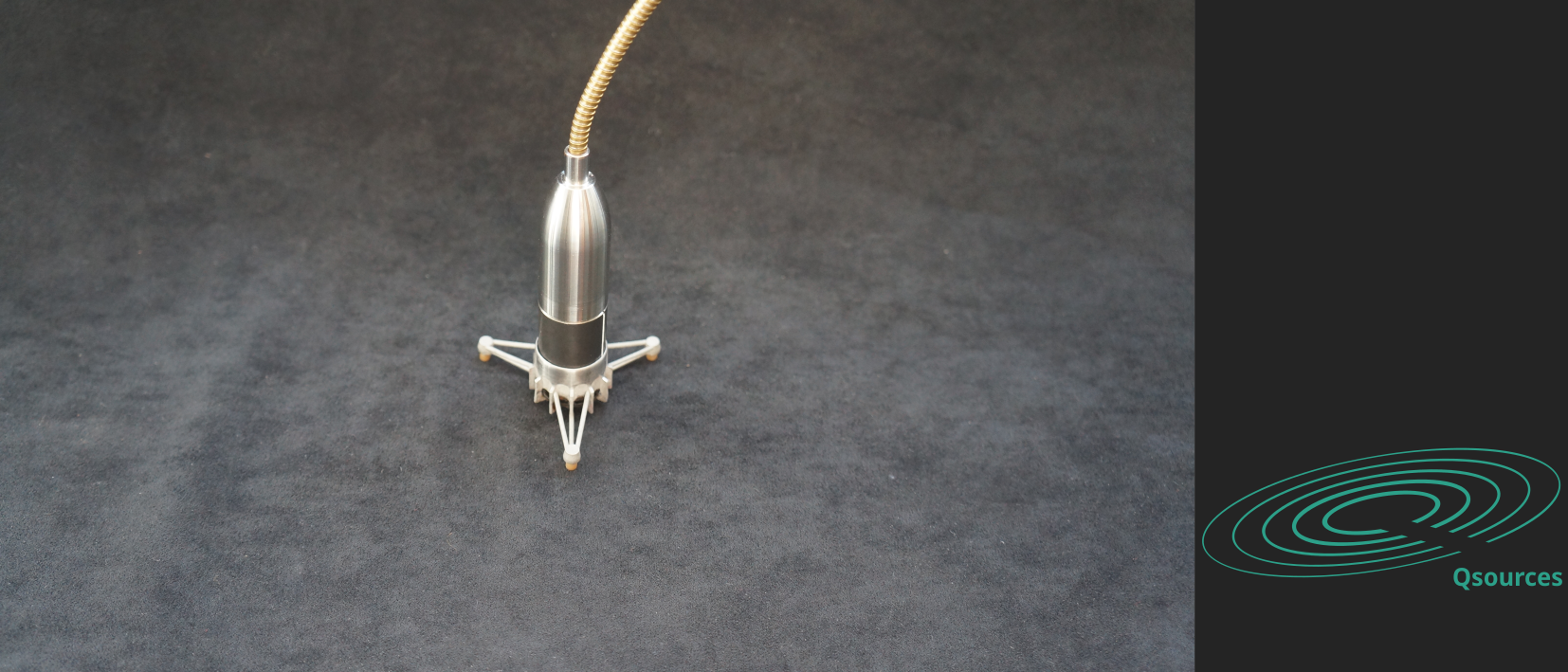
Miniature Monopole Reference Source - Qmir
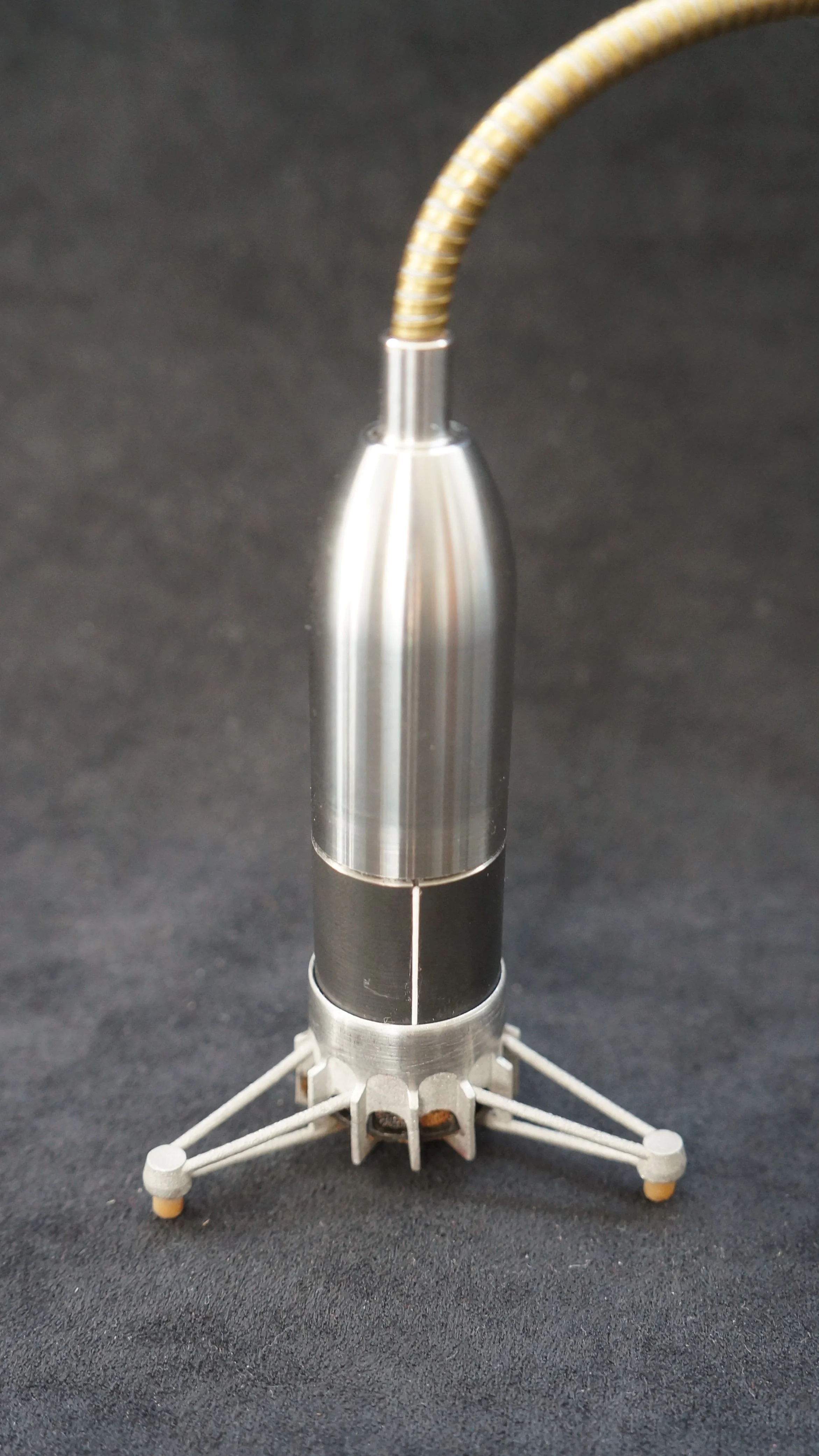
The Qsources Qmir is a compact reference sound source, a monopole or point source, designed for level stability. It is intended for placement on a surface at any inclination. The Qmir serves as both a reference volume acceleration source and a sound power reference source. Due to its unique size and operating principle, this source offers a significantly broader application range than any other sound power source currently on the market.
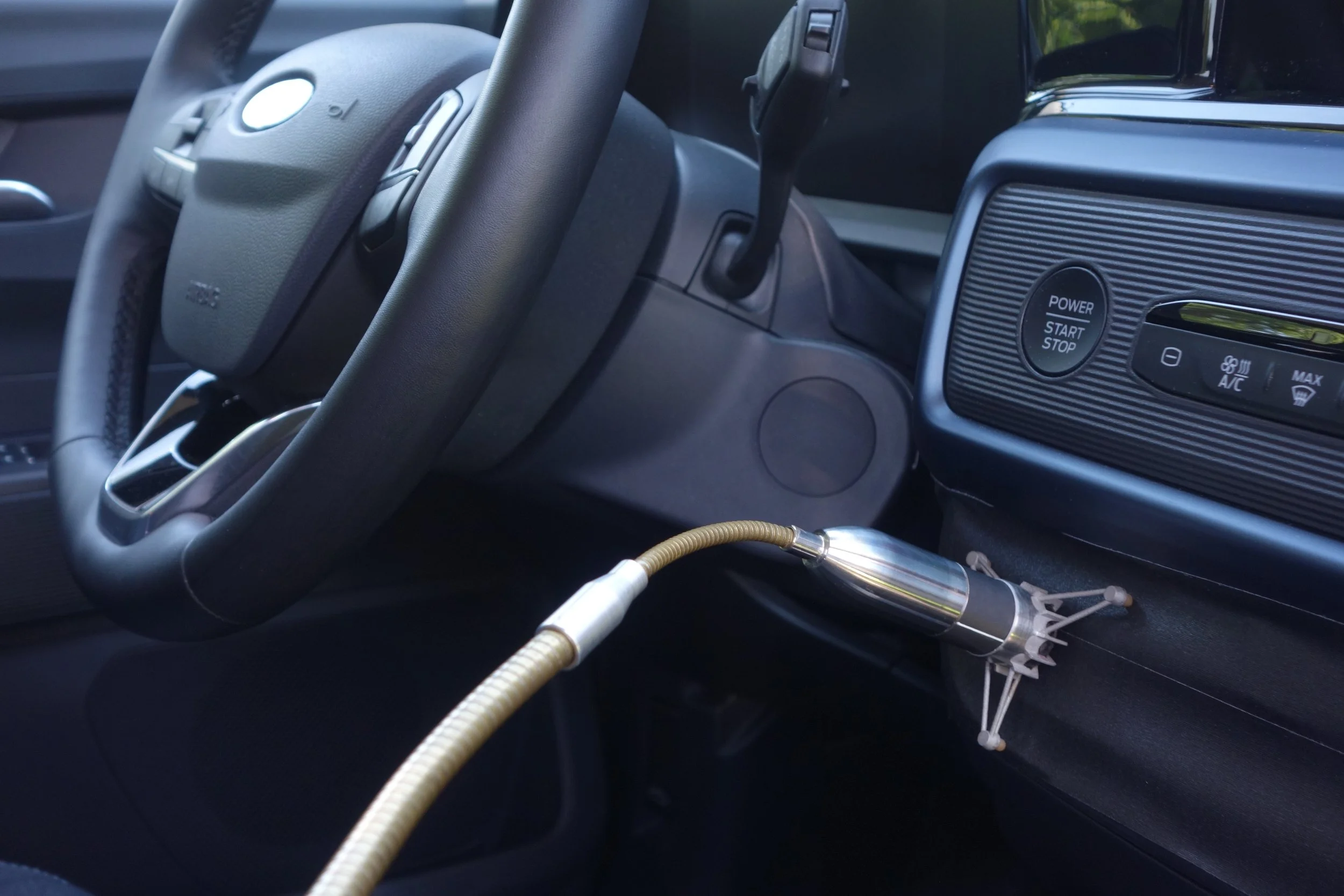
The Qmir serves as a constant volume acceleration sound source for applications such as accurate isolation and decay testing of encapsulations, vehicles, etc., basic and fast power-based inverse sound source level estimation without phase, Statistical Energy Analysis (SEA) applications, and third-octave band acoustic transfer function measurements.
The Qmir serves as a sound power reference source (ISO 2629) for applications such as the verification (calibration) of noise test cabins or rooms for products like pumps, ventilation systems, and even small product-test cabins; on-site indirect machinery sound power determination (ISO 3747), including for higher frequencies; anechoic and reverberation cabin or room verification; full-chain verification (calibration) of large microphone arrays, from hardware to software; Statistical Energy Analysis (SEA) applications; and room acoustics numerical model verification for smaller spaces and cavities.
The Qmir distinguishes itself from traditional sound power references through its miniature size, monopole radiation, relatively high output, low weight, inclination flexibility, and precise signal control. These features enable measurements in small and acoustically challenging spaces, as well as at higher frequencies, surpassing the capabilities of any other source currently on the market.
Features
Compact Design & Flexibility: Its miniature size and ability to operate at any inclination facilitate easy and efficient application on test beds, in confined spaces, against machinery, or in elevated mounting positions.
Small Space Capability: It can be used in small cabins or cavities down to 10 liters with 1% damping, thanks to its high acoustic impedance.
Precision Radiation: Delivers monopole spherical sound radiation with a fully flat, equalized spectrum from 200 Hz to 10,000 Hz, providing a new level of accuracy for applications.
Versatile Analysis: Provides both sound power and volume acceleration outputs, enabling various power analysis and transfer analysis methods.
Calibration Options: Standard delivery includes a factory-measured third-octave spectral output sheet. An external ISO 6926 calibration from a certified laboratory is available upon request.
Stability: Offers predictable and time-stable volume acceleration levels across all third-octave bands, eliminating the need to capture a real-time volume acceleration signal.
Safety Indicator: Includes an audible warning signal to alert the user when the device operates outside its stable working zone.
Main Characteristics
Signal Types: Generates pink noise, white noise, and sine sweep signals.
Frequency Equalization: Fully equalized in third-octave bands from 200 Hz to 10,000 Hz.
Dimensions: Miniature source with a diameter of approximately ±22 mm.
Reference Type: Constant volume acceleration and power reference source.
Weight: Lightweight at 0.3 kg.
Sound Power Level: Approximately 83 dB LW (equalized pink noise).
Core Frequency Range: 400–8,000 Hz.
Extended Frequency Range: 200–10,000 Hz.
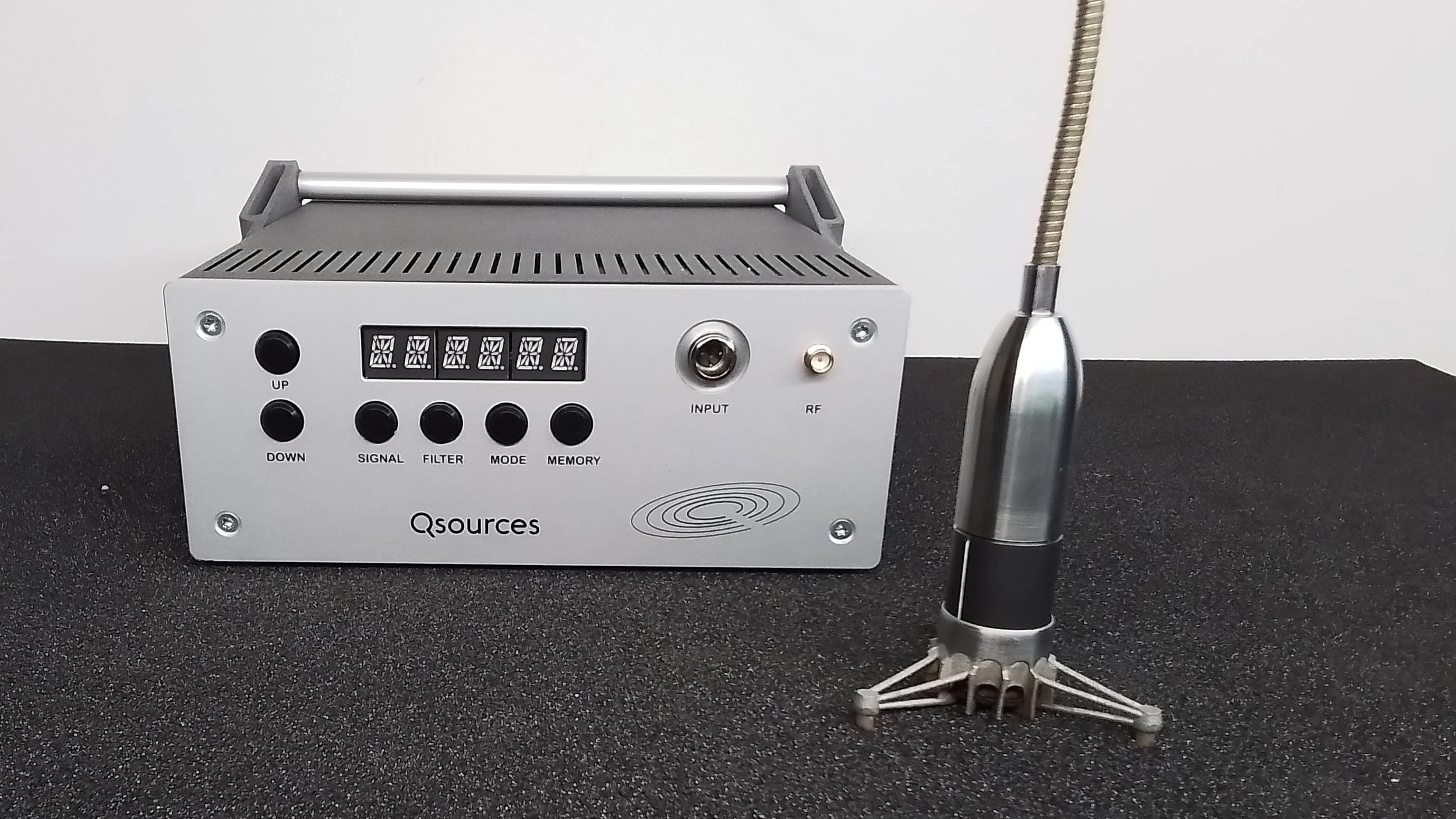
System Requirement: Functional only as a complete set comprising the Qsources-Qmir source and the dedicated Qsources-Qam amplifier.
Practical sound power identification on-site
Manufacturers often specify machines with a sound power level. While installed machines typically emit sound power within these specified limits, this does not guarantee that the resulting sound pressure level will satisfy the customer. Furthermore, installation issues can sometimes significantly increase a machine's actual sound power.
Therefore, on-site measurement of a machine's sound power is valuable in certain situations. This is achievable via sound intensity scanning, provided that the necessary equipment and software are available, the operator is trained to perform the measurement reliably, and the room acoustics are not excessively reflective or reverberant.
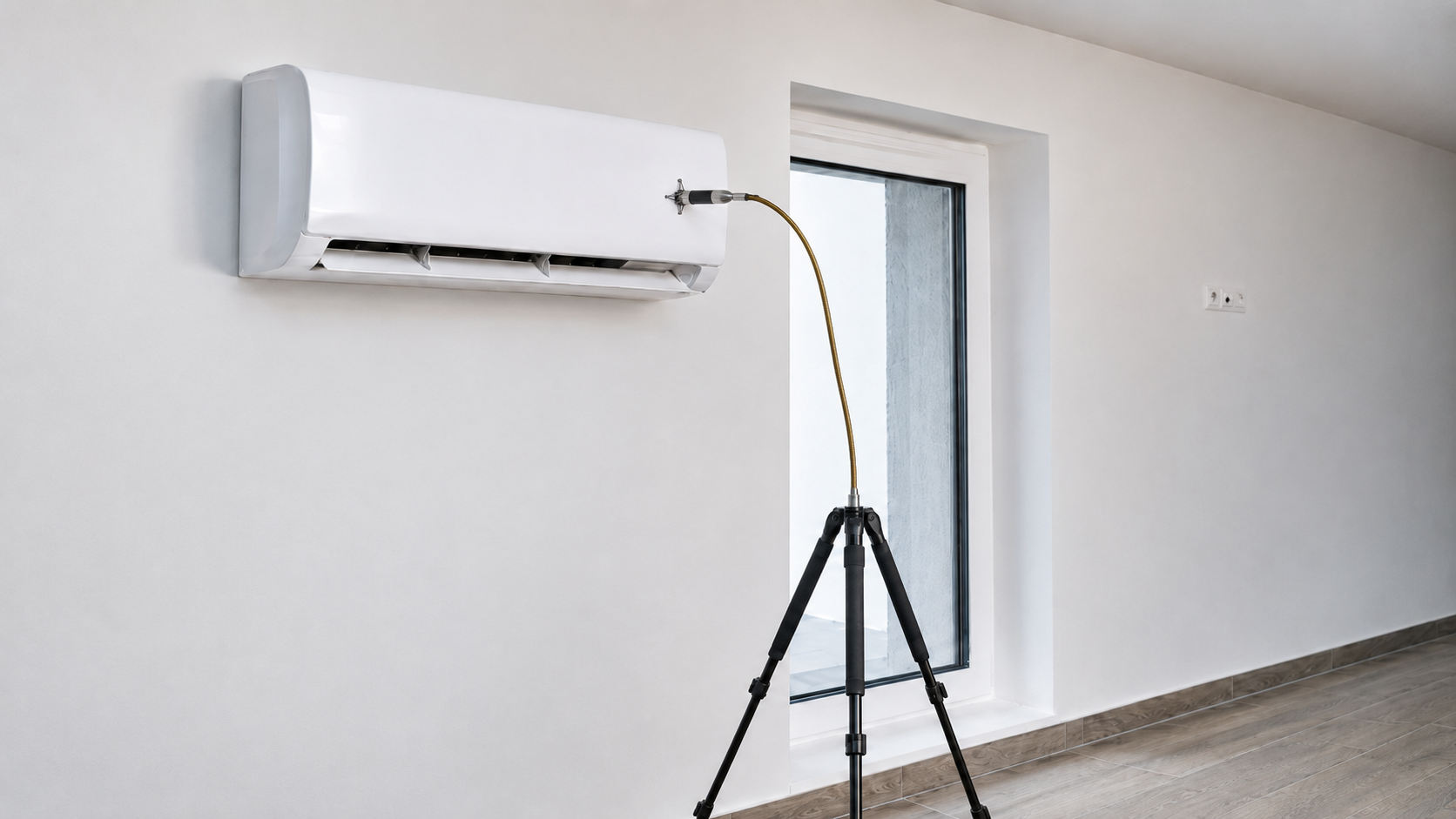
Are you familiar with the ISO 3747 standard for sound power determination? It is worth reviewing. This method utilizes standard microphones or sound level meters alongside a reference power source. First, third-octave sound pressure spectra are recorded around the operating machine. Then, the same spectra are recorded with the reference source active and the machine turned off. This is the fastest and simplest method for determining sound power on-site.
The Qmir and Qref sound sources have made this method more efficient and accurate. Transporting and positioning the reference source on-site is now faster and easier. Moreover, the reference source can be placed amidst multiple exposed surfaces of the machine, rather than being restricted to a single position on top (which is often the only practical option with heavy, bulky traditional power reference sources). This multi-position data enables averaging, redundancy, and verification of the calculated sound power level stability, significantly increasing overall accuracy.
For those wishing to delve deeper into the analysis, the multi-position pressure data can even facilitate inverse source identification in third-octave bands. However, this method is best employed alongside a thorough study to prevent misinterpretation of the results.
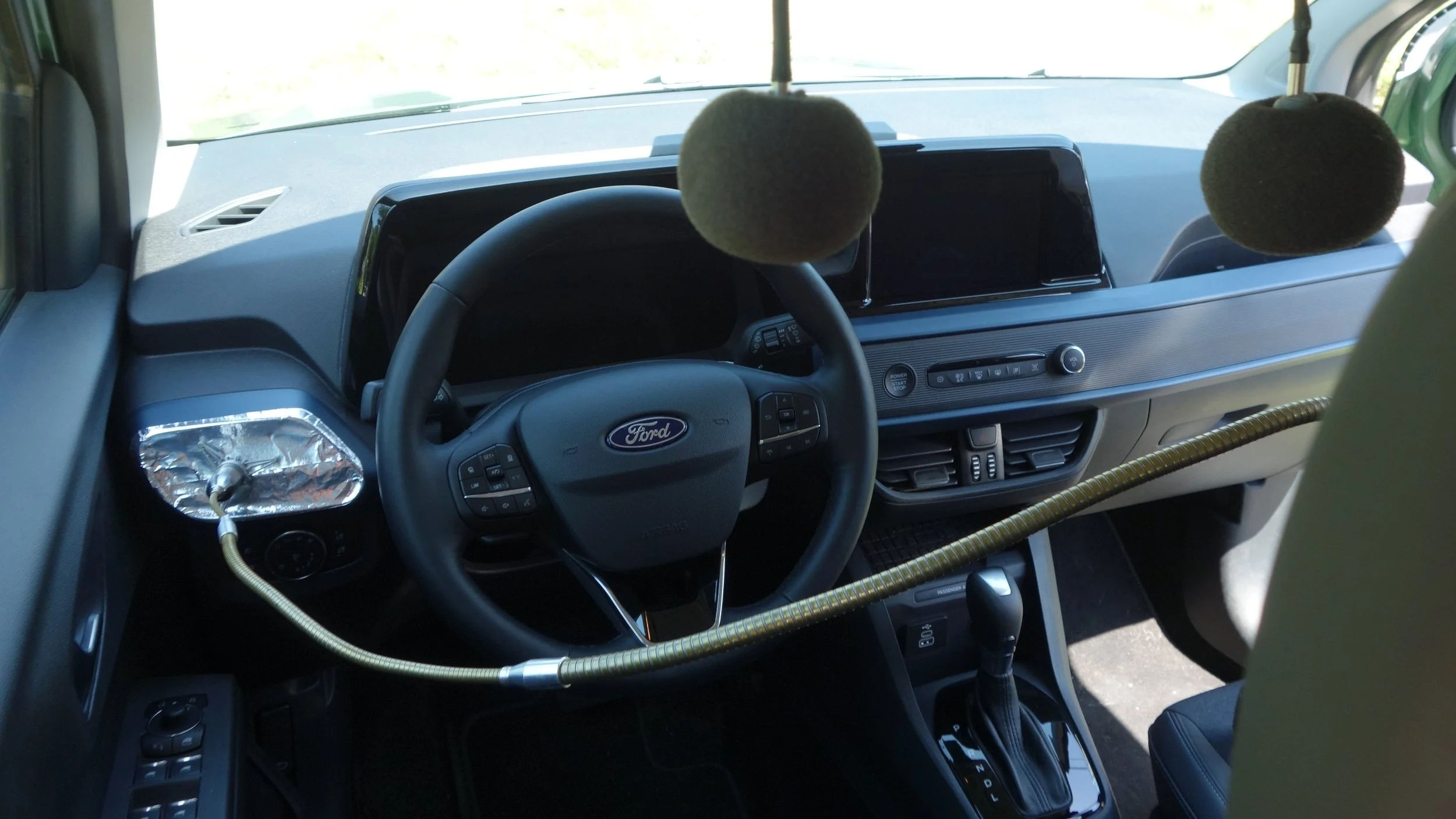
Practical third-octave acoustic transfer function measurements
Acoustic transfer functions describe the sound pressure (P) response resulting from volume acceleration (Q) at a specific source location. These P/Q measurements have become a standard in the automotive industry for specifying airborne isolation, and their application is expanding to other fields and use cases.
Volume acceleration sound sources equipped with integrated sensors (such as the Qlmf, Qmhf, Qmed, and Qind) can be used to measure narrow-band Frequency Response Function (FRF) data, including phase information, for a wide variety of applications. While the Qmir reference source does not provide an accessible volume acceleration signal, it offers a known and time-stable volume acceleration level for each third-octave band. This known level is sufficient for deriving third-octave acoustic transfer data based solely on third-octave sound pressure measurements. Consequently, the complexity associated with narrow-band FRF measurements and signal analysis is no longer required to obtain reliable transfer level data in third-octave bands (though phase information is excluded).
The Qsources Qmir and Qref enable reliable measurements using standard sound level meters or microphones, making this an efficient and cost-effective method for various airborne applications. Potential use cases include sound isolation measurements on machinery encapsulations, acoustic optimization of helmets, and noise control for ventilation systems, among others.
Empowering microphone array measurements
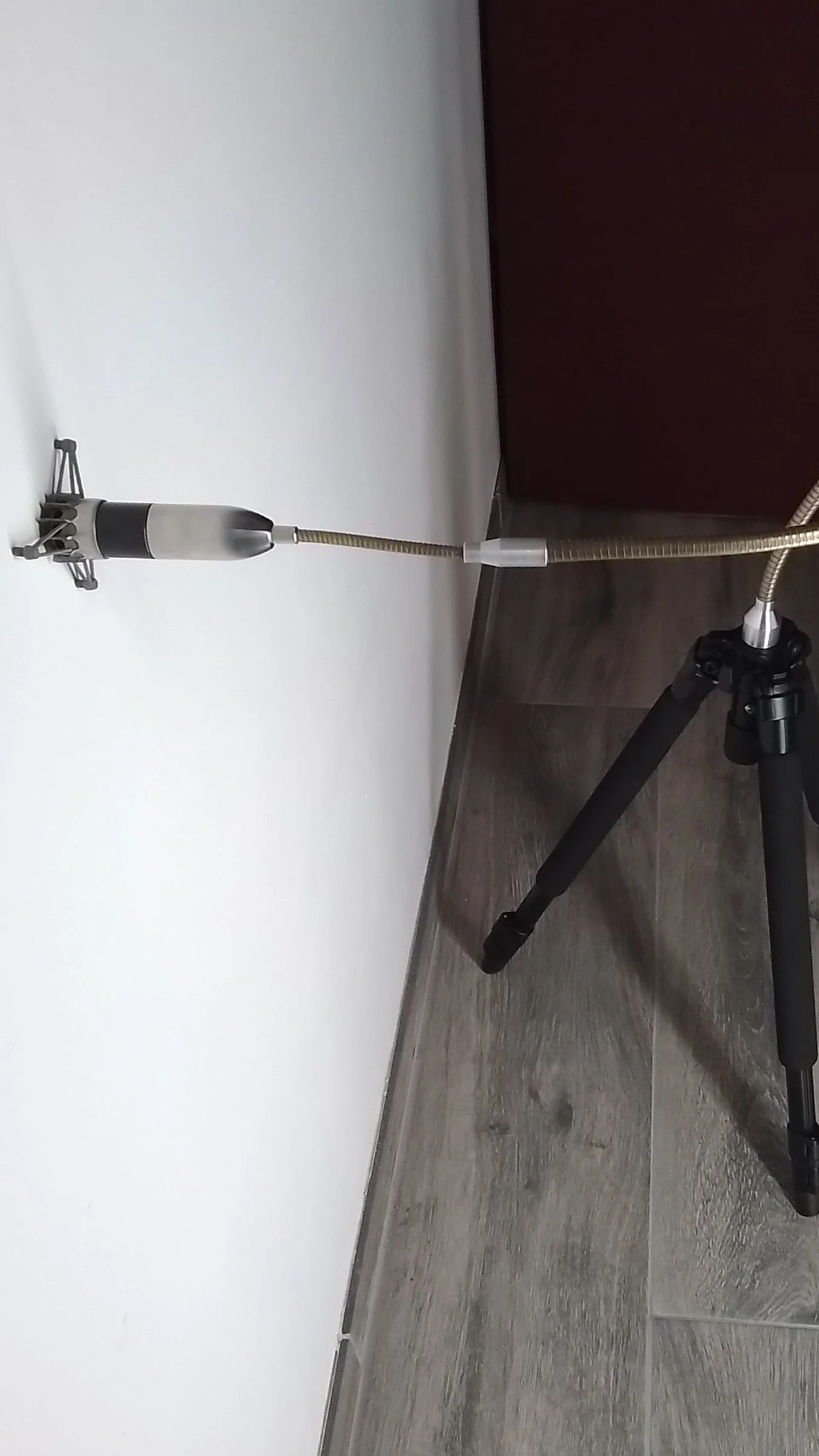
Due to its small size combined with a broadband high output level, the Qsources Qmir can be used for full-chain verification of large-count microphone arrays.
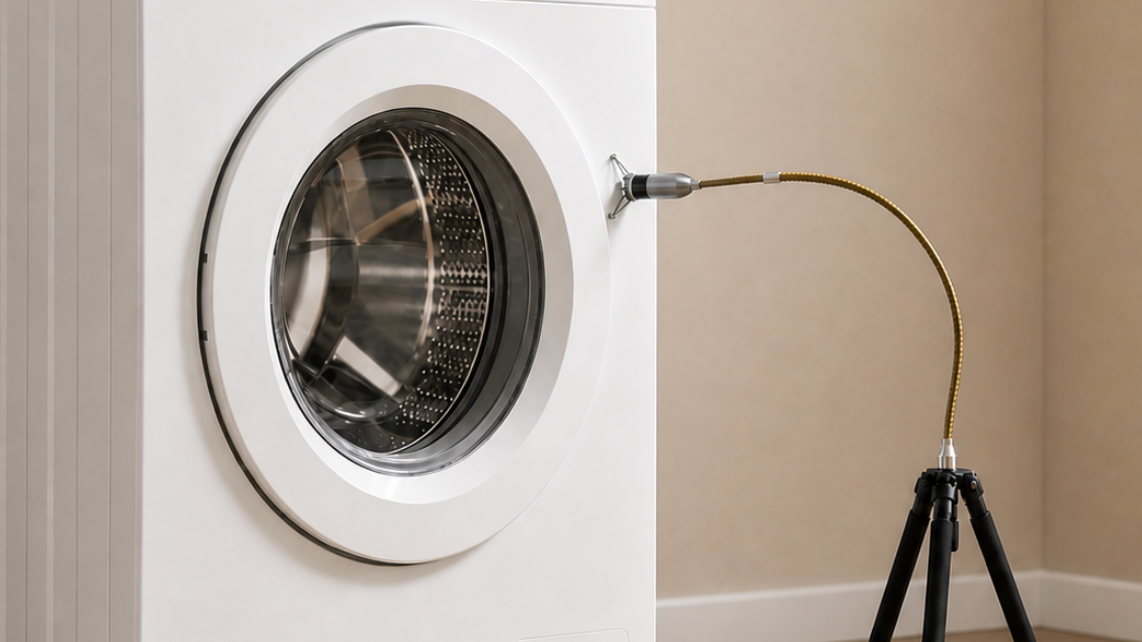
Consider an array measurement on a washing machine installed in a realistic kitchen setup. After capturing the contribution map while the machine is in operation, the washing machine is stopped. The Qmir is positioned at the most significant location on the washing machine, as identified by the color map from the beamforming array. The Qmir is then activated, and using the same beamforming settings, the distribution color map is measured again with the array and processing software.
Key questions to address during this process include:
Is the level (color) distribution similar for the chosen position of the Qmir on the test object, or is it significantly different? (See the photo of the washing machine side.)
Are there mirror sources or edge sources appearing in the color distribution map when using the Qmir?
Does the spatial resolution of the beamforming (or other analysis) align with the actual size of the sound sources (approximately ±25 mm diameter)?
Is the array and its software providing a correct level estimation for the sound power or volume acceleration of the selected area on the beamforming display?
Comparing the operational beamforming data with the reference source beamforming data clarifies the situation. While microphone arrays (with various processing types) can quickly provide an impression of the location of active noise-radiating areas on objects or structures—a very useful capability—the interpretation of array images and source level estimation can be difficult. This is due to relatively large wavelengths in the air, imperfect access, and reflecting objects.
An additional measurement with the Qmir empowers these images. By placing the Qmir on the test object or structure at a suspected (or interesting) location, a known sound power or volume acceleration is introduced over an area of approximately ±25 mm in diameter. The microphone array will then immediately reveal the effective resolution of the system, highlighting where mirror sources or severe diffraction are blurring the map. Furthermore, because the Qmir provides a known level, it allows the image of the naturally operating test object to be accurately scaled.

Availability
The Qmir-Qam set is available directly from Qsources Belgium, HEAD Acoustics or through a selected local partner in your region.






*What is core frequency range for sound sources?
In the core frequency range a close approximation of omni-directionality and highest output can be expected. Or in case of sources for ISO standard regulated requirements, like for building acoustics applications, the source will be within the ISO requirements both in the extended frequency range, and in the core frequency range. But, in the core frequency range the accuracy will even be better.
**What is extended frequency range for sound sources?
Including the 200 Hz, 250 Hz and 315 Hz third octave bands in equalized random signal decrease the maximum level by approximately 4 dB relative to the core frequency range only.
The highest third octave band, 10000 Hz, does not reach the same level of omni-directionality as the other third octave bands .