
Home is the opportunity for a moment of peace and quiet. Maintaining this peace in apartments and houses is a challenge for manufacturers of comfort- and life-supporting systems. Modern heat pump based heating/cooling systems and devices such as the dishwasher, range hood, coffee machine etc. all risk generating noises and vibrations into the structure of the home.
This challenge is combined with energy efficiency requirements, cost control in a hyper-competitive market and regulations on which materials are allowed. The final sound quality of a product can make its market position stronger, or weaker, simply because complaining customers are much “louder” than the satisfied ones.
Knowledge of the phenomena on the product is essential
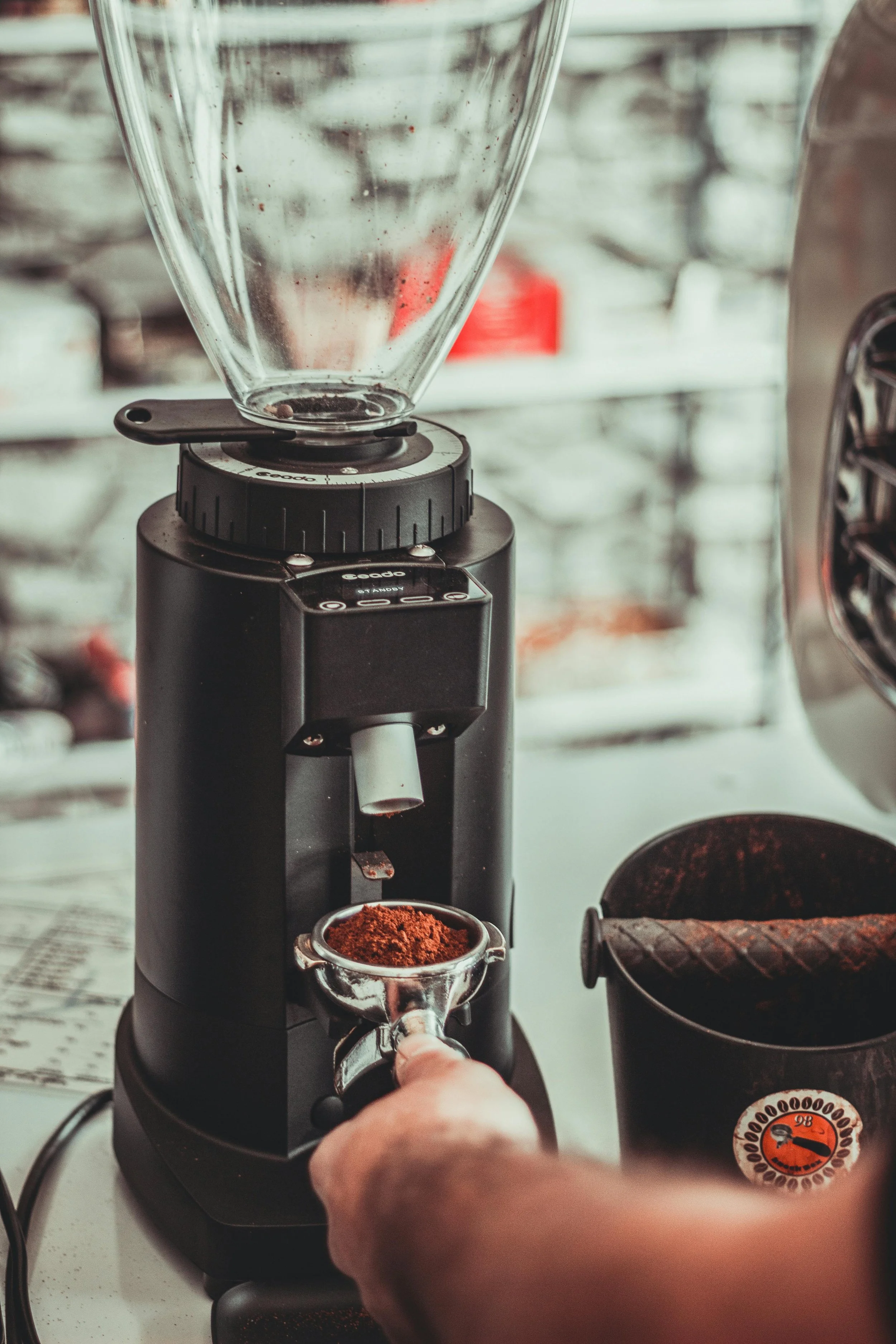
Important questions need to be asked. Where are the internal dynamic forces or unstable flow generated? How is this transferred to the outside of the device? And which surfaces on the device actually radiate noise?
Potentially it’s not the device itself that generates the noise. Vibration at attachment points onto the house (for example for air-conditioning or heat pumps) or the supporting feet (for example a coffee grinder sitting on a kitchen cupboard) can be the dominant source of low-mid frequency noise radiated by large surfaces. What is determining the dynamic forces at the support locations of the device? Can we influence the transfer between the “grinder/pump” and the feet?
With the understanding of these phenomena and their transfer through the entire chain up to the ear of a person (trying to have a rest) it becomes clear where a maximum gain at minimal costs is possible.
For example, should a part of the housing be full of openings to minimize its noise radiation? Or should it be be well closed, and damped, to isolate the part behind it? Can soft feet reduce the vibration leading into the supporting structure? Or will it just shift the machine modes down into the critical rotation frequencies, making it even worse?
There is a range of techniques available to investigate. The measurements and processing can build understanding in the staff, then driving and validating CAE models to assess solutions and modifications.
Multi-microphone and particle velocity scanning in operational condition can give insight into where noise is radiated and in which condition, whereas Experimental Modal Analysis (EMA) can help measuring the structural dynamics of components and assemblies. Not just structural, acoustic modes in cavities and vibro-acoustic coupled modes can be measured too, which can for example clarify where stiffness, mass, or damping is missing.
Transfer path techniques (TPA, ASQ) can be used to estimate the dynamic forces at interfaces or in the drive part (electro motor, pump, grinder or nozzles). Lastly, direct excitation and reciprocal transfer function measurements can show high sensitivity at interfaces or across the machine structure, of excessive radiation sensitivity of some parts.
In this environment, advanced acoustic and structural excitation technologies can play a vital role in supporting R&D teams working on gradual improvement and next generation product development.
Practical and reliable excitation devices
Qsources has developed its dynamically decoupled and compact shakers from the experience of measuring on a large range of objects in labs and on-site, while responding to limitations encountered by alternative excitation solutions. The target is efficient measurement of accurate transfer function data for load identification, modal analysis, energy flow, airborne and structure borne transfer path applications.
Controlled artificial excitation with accurate force signals remains a challenge. Instrumented hammer impacts tend to produce an inaccurate FRF matrix, whereas access in some places might be difficult or even impossible. On the other hand -when possible to use- externally supported shakers with a force cell can cause significant mass loading on lightweight structures, and stinger modes limit the frequency range.
Being far more compact than anything else, self-aligning in any inclination and having a very low coupled mass in the working frequency range has allowed Qsources to extend the scope of inverse load identification limit significantly.