
The automotive sector is undergoing one of the most profound transformations in its history. Electrification, lightweight design, and software-defined vehicle architectures are reshaping development processes while regulatory pressure and cost targets continue to tighten. At the same time, customers expect nothing less than the established high quality standard.
These developments create significant challenges for noise, vibration, dynamics, and structural validation. In electrified platforms, the absence of combustion engine noise exposes previously masked airborne and structure-borne effects. Lightweight mixed-material body structures introduce complex modal behaviour and new coupling phenomena. Shortened development cycles demand earlier and more reliable correlation between simulation and physical testing, with robust and repeatable excitation strategies playing a central role.
To remain competitive, OEMs must ensure precise assessment of the materials, concepts and designs—both in R&D environments and in production-related validation. Computer-Aided Engineering (CAE) models often have become the sole way for choosing the best solutions for the vehicle. Efficient, accurate, well controlled artificial excitation testing and correlation have a vital role in making these CAE models (digital twin) more reliable. It also has an essential role in obtaining well estimated operational vibration loads and airborne sources. And some critical parameters, like damping and interface contact zones in CAE models, depend on testing.
Precise approximation of point sources with well known source strength is the foundation for various airborne and coupled air-structure-fluid borne measurements. Precise directions and minimal interference with the test-object are the basis for structural and structural-air-fluid borne measurements. The follow-up sensing and processing of signals and data are essential too. Qsources’ excitation solutions help make the excitation part efficient and accurate.

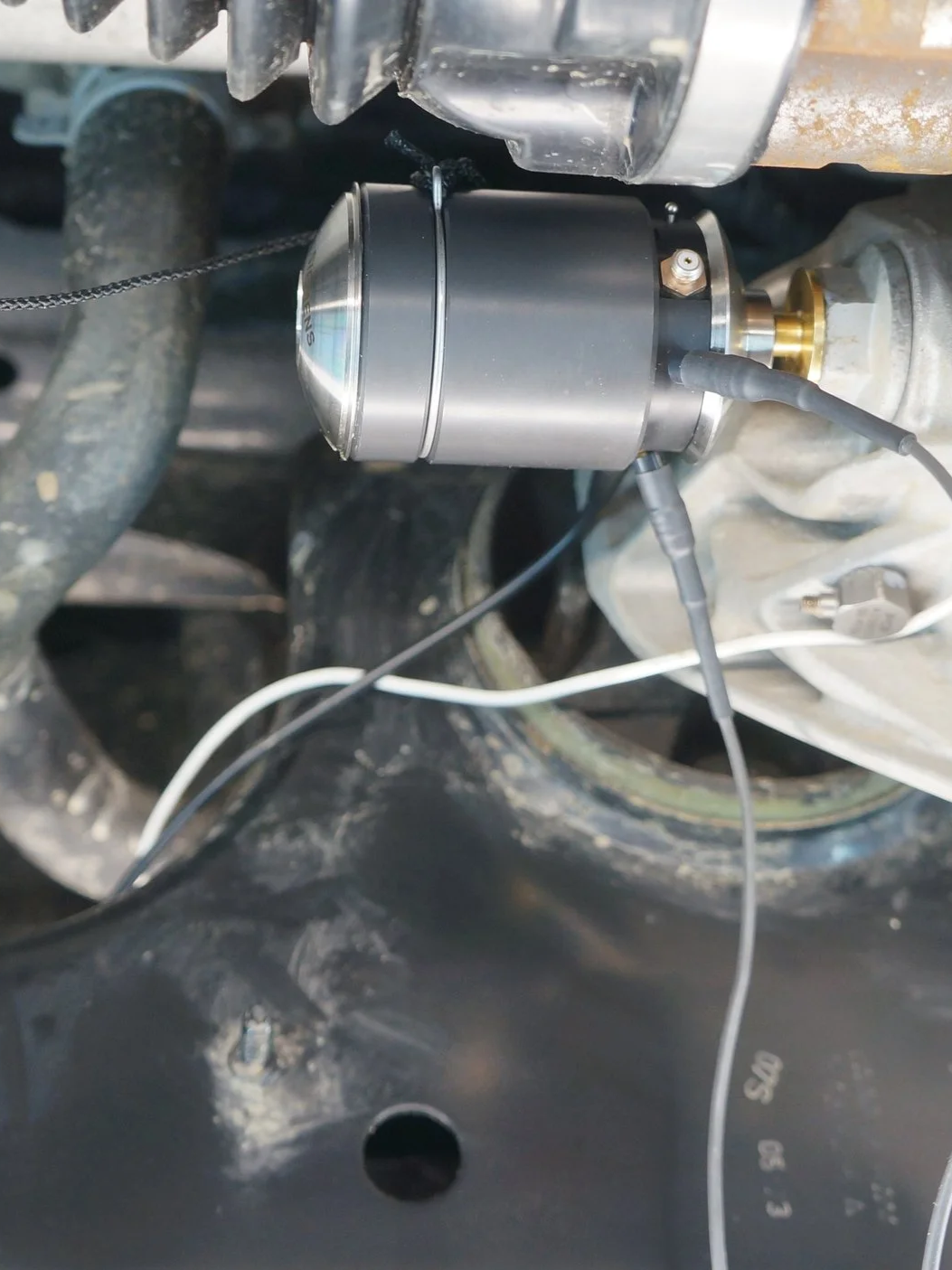
Specialized sound sources & shakers tailored to automotive
Qsources has pioneered the development of specialized sound sources and shakers which were first tailored for automotive testing. Driven by the significant efficiency gains they offer during testing and the high reliability of the data they generate, several Qsources’ shakers and sound sources have become the standard in the automotive industry. They are widely utilized in NVH processes such as among others Frequency Response Function (FRF), Experimental Modal Analysis (EMA), modular structure borne and airborne Transfer Path Analysis (TPA) and Frequency response Based Substructuring (FBS) measurements. Since many system suppliers, part suppliers and engineering consultants already use the same Qsources excitation devices, consistent and high-quality data across the entire vehicle development chain is supported.