Medium sized high-value objects like cars, truck cabins, machining laths, aero engines, vertical take-off vehicles, neighbourhood distribution transformers, fuselages, etc. often require careful control of the vibration and lower frequency noises. Rendering measurements on these objects and their main components, more efficient and less technician dependent Qsources developed the new Qwis shaker. A combination of compactness, self-supporting and self-aligning suspension and an extremely low coupled mass. The patented design principle gives the Qwis shaker (together with the Qsls- its big brother) the highest force density in the market.
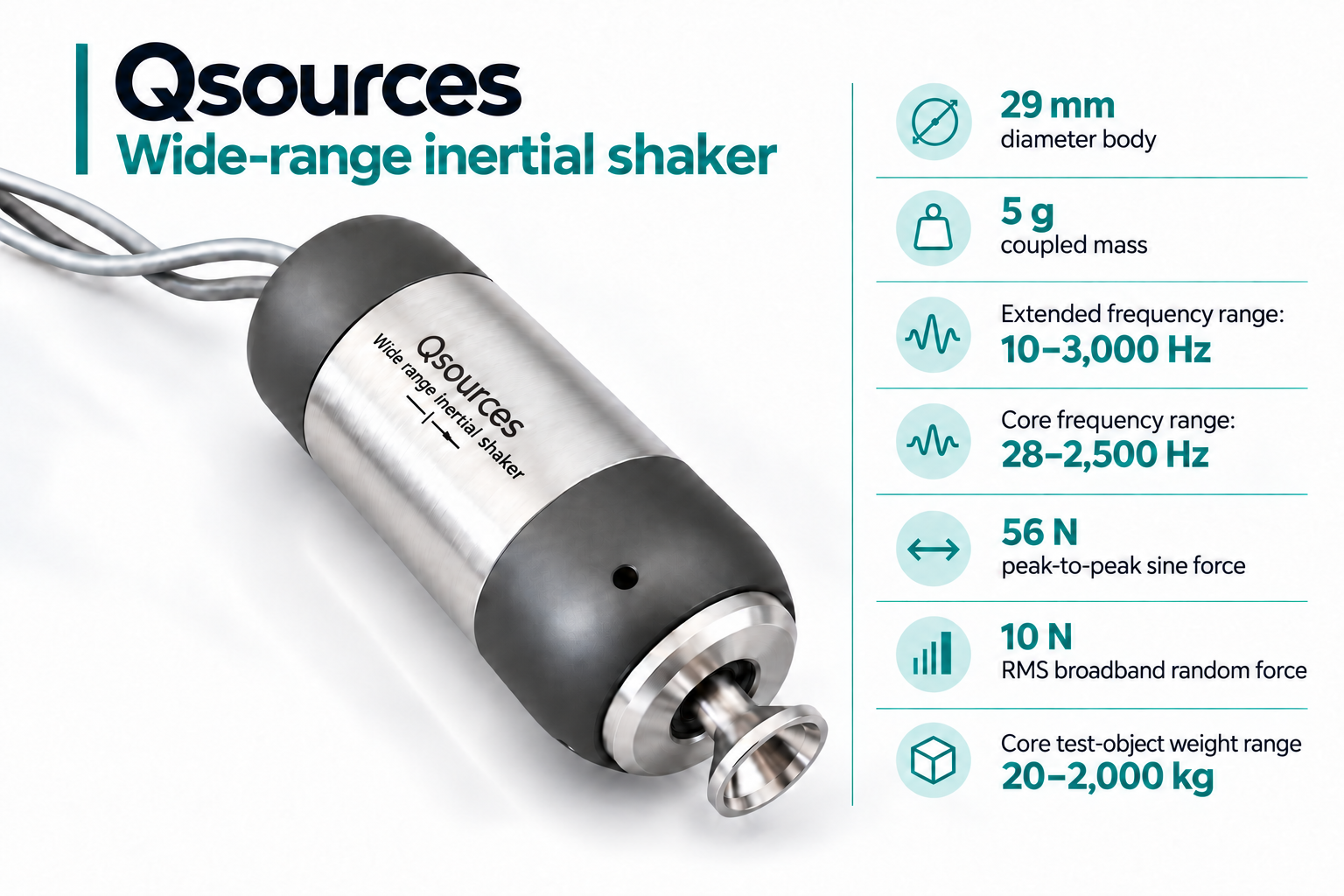
The Qwis has integrated high-resolution force sensing and an in-line accelerometer module which allow different technicians to obtain accurate, identical FRF measurements. The shaker is fully self-aligning and self-suspending, works in any inclination and in the narrowest spaces, with negligible influence on the test object's natural response. It thereby solves the main issues traditional excitation methods are confronted with. Impact hammers require experience and multiple tip and mass combinations to cover the same frequency ranges, with only moderate accuracy. Externally supported shakers on the other hand demand repeated stinger changes, tedious (re)alignment, while adding mass to the test object.
Intended Use:
Diagnosis of problems
Design/materials optimization
Quality verification
Identified loads for simulation
…
Possible techniques:
Experimental Modal Analysis
Transfer Path Analysis
Hybrid sub-structuring
Load identification
Statistical Energy Analysis
Numerical model correlation
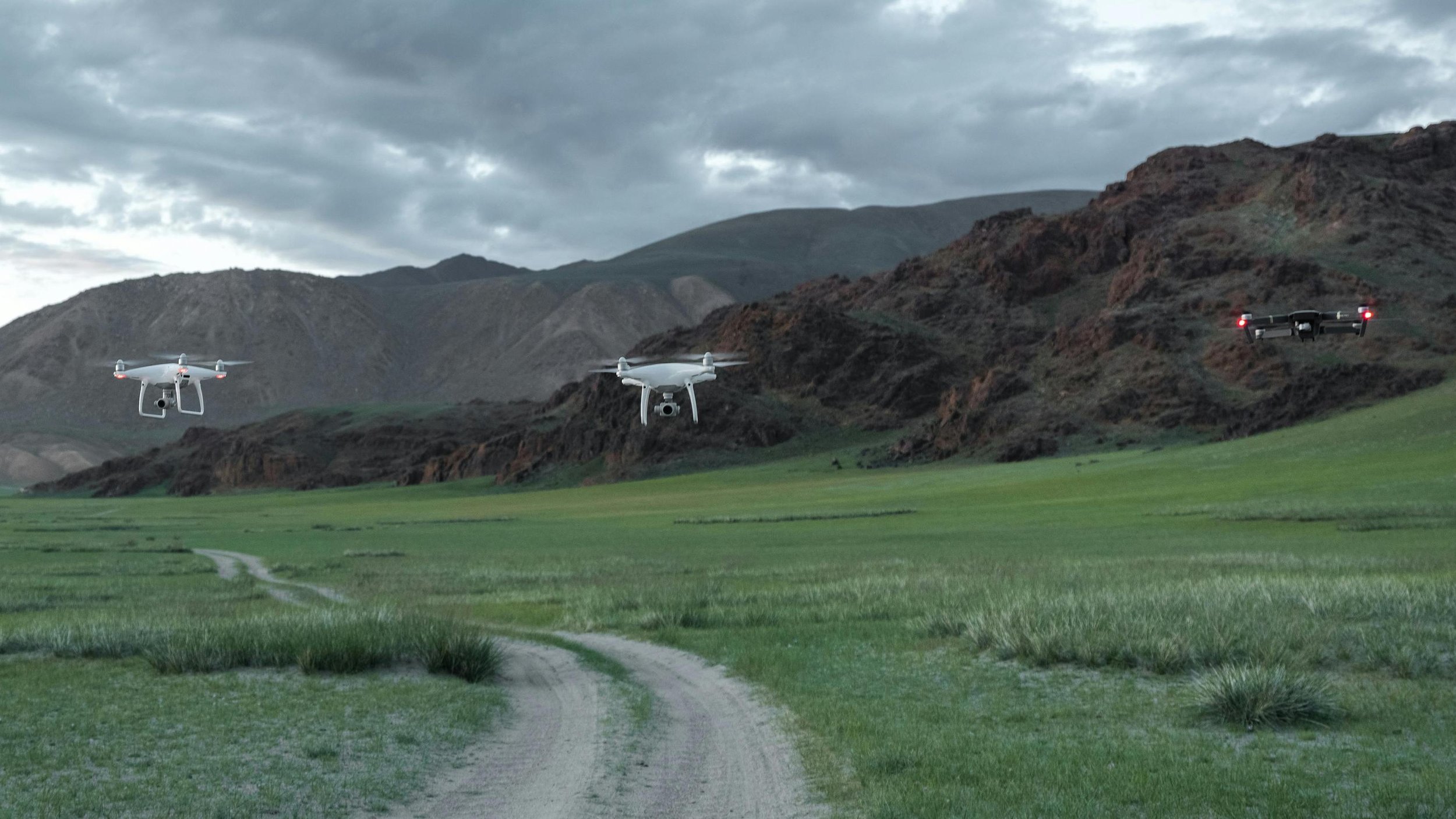
Drones and Robots
Autonomous devices must operate around humans quietly and predictably — no one wants a nursing robot that rattles, roars or clunks, yet you still want to hear it approaching and working carefully. Electric drives, high-speed rotation, transmissions and airflow generate impulses, vibration and turbulence, while lightweight constraints leave little room for isolation and damping. Excessive vibration can degrade accuracy or cause damage.
Qsources excitation devices support the whole development chain: inverse load identification at force interfaces, Experimental Modal Analysis to verify and correlate FE models and digital twins, and reciprocal vibro-acoustic transfer measurements where interfaces are simply too small to access. The result: quieter, smoother, better-received machines.
Qohm- hear it from our customers
Franck Mugnier (Acoustics and Vibration Expert)
Very happy with my new dodecahedron!!! Small and ultra-lightweight, yet powerful (even in the low frequencies down to 50 Hz)... It's the most suitable omnidirectional noise source for my use. I can even carry it in my scooter's top case! It saves me time and energy... Bravo to the Qsources R&D team — you've developed a marvel!
(This is an English translation. Please find the original French article via the underneath button.)