Floating piston exciter - Qikk
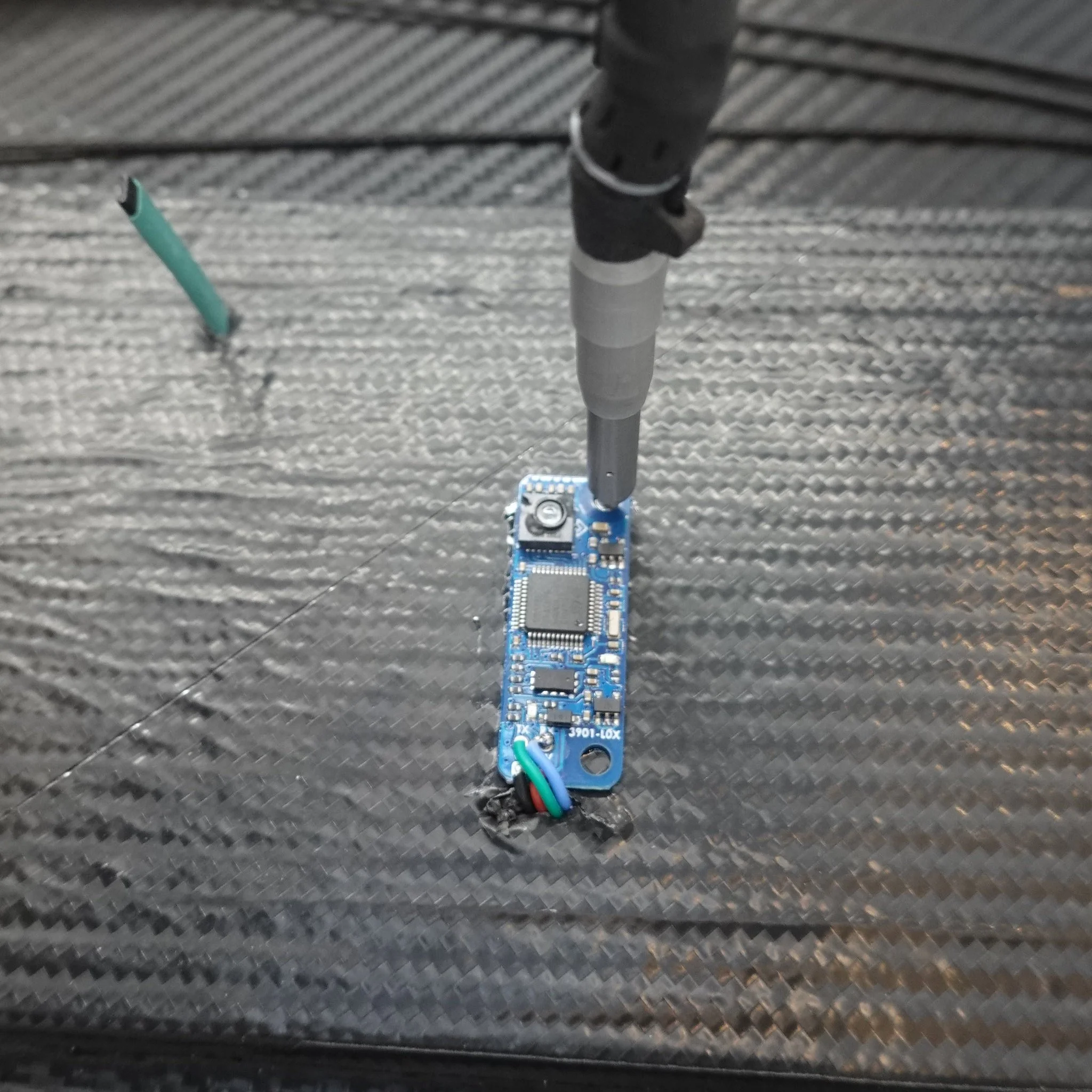
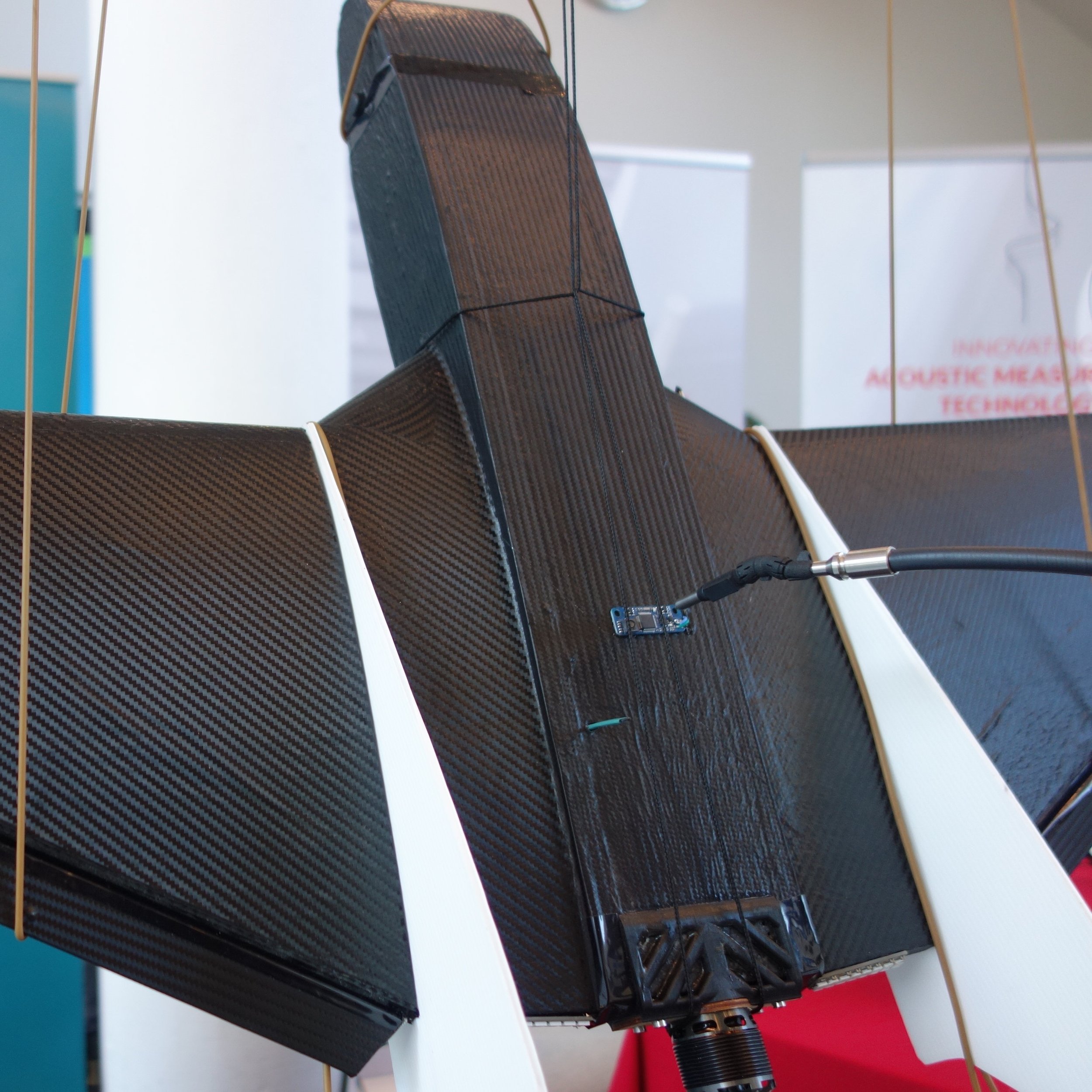
The Qikk is developed for repeatable and accurate excitation of tiny and lightweight objects.
Some examples:
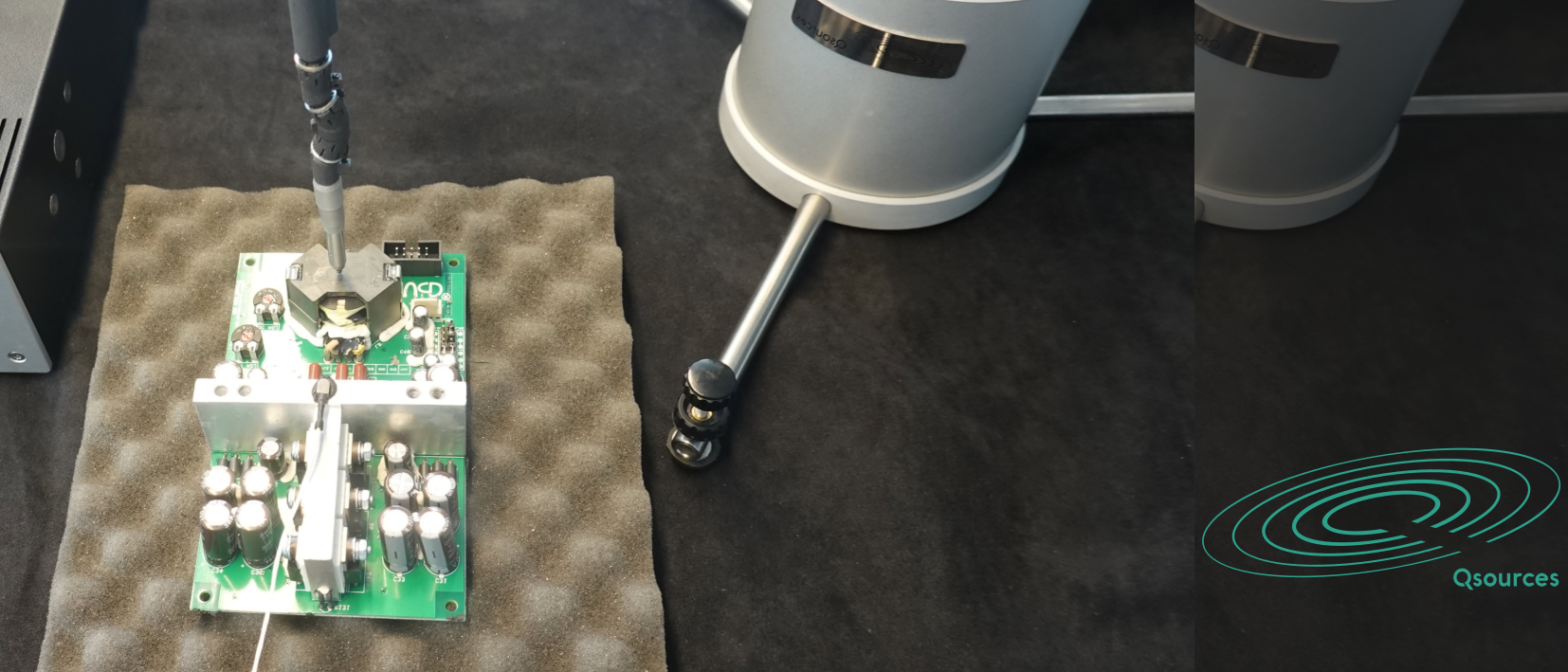
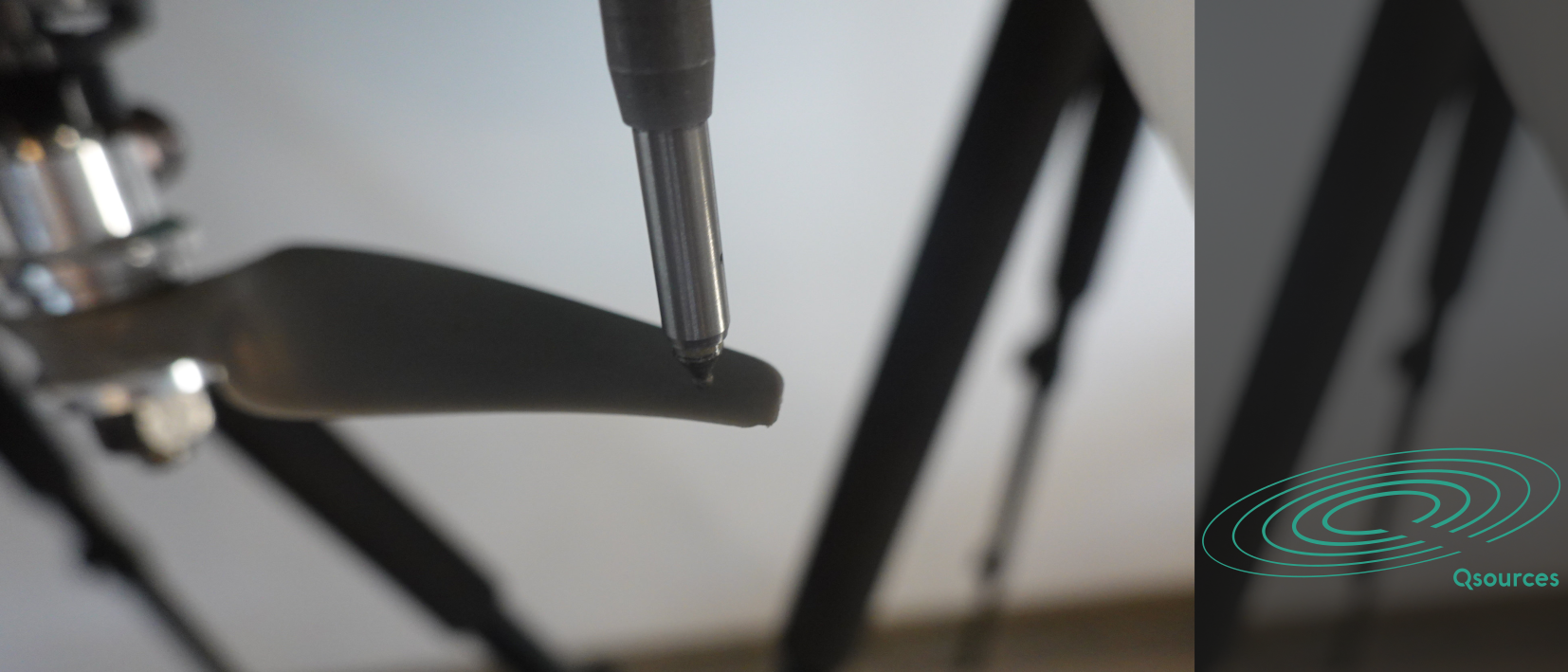
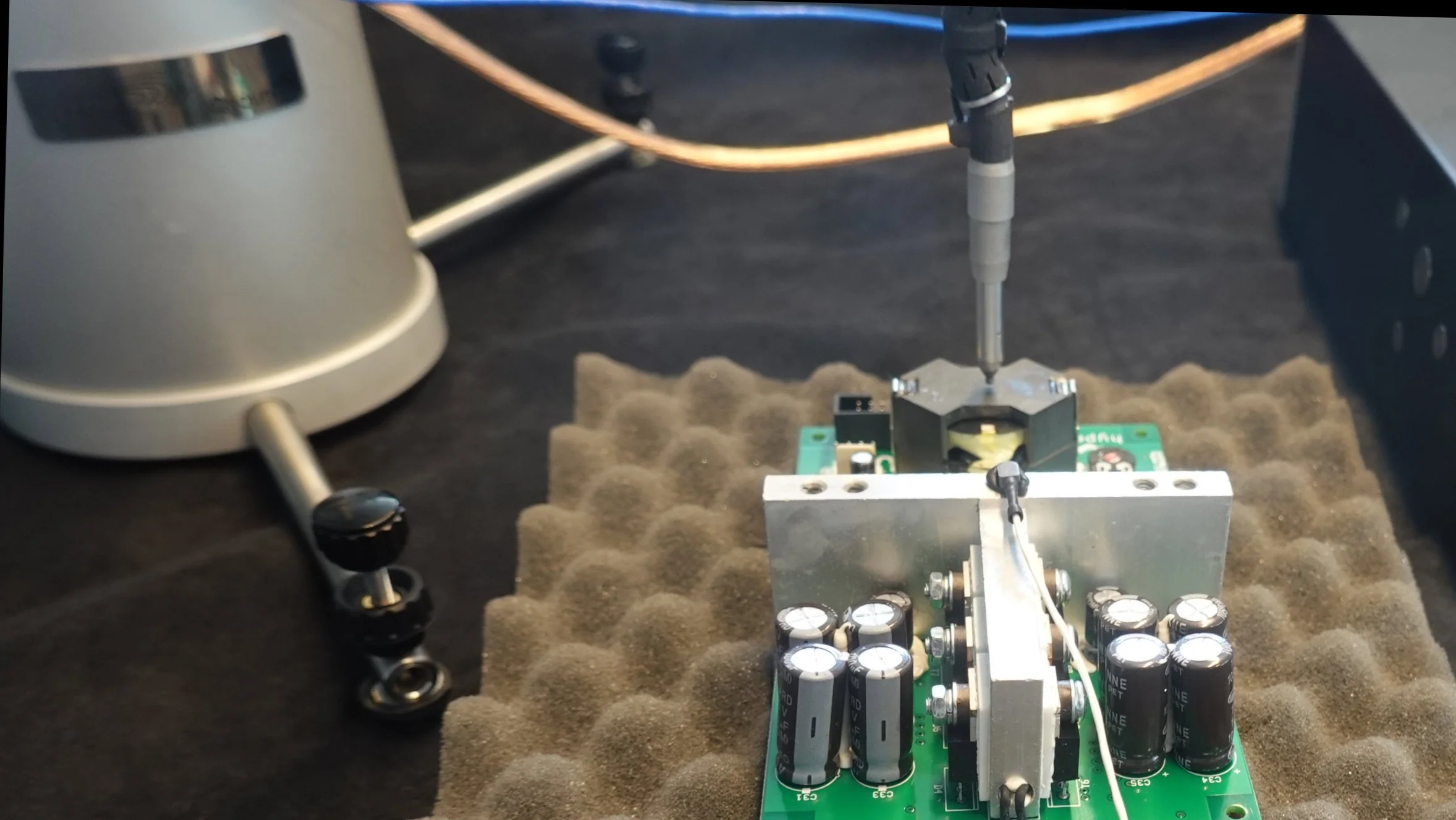
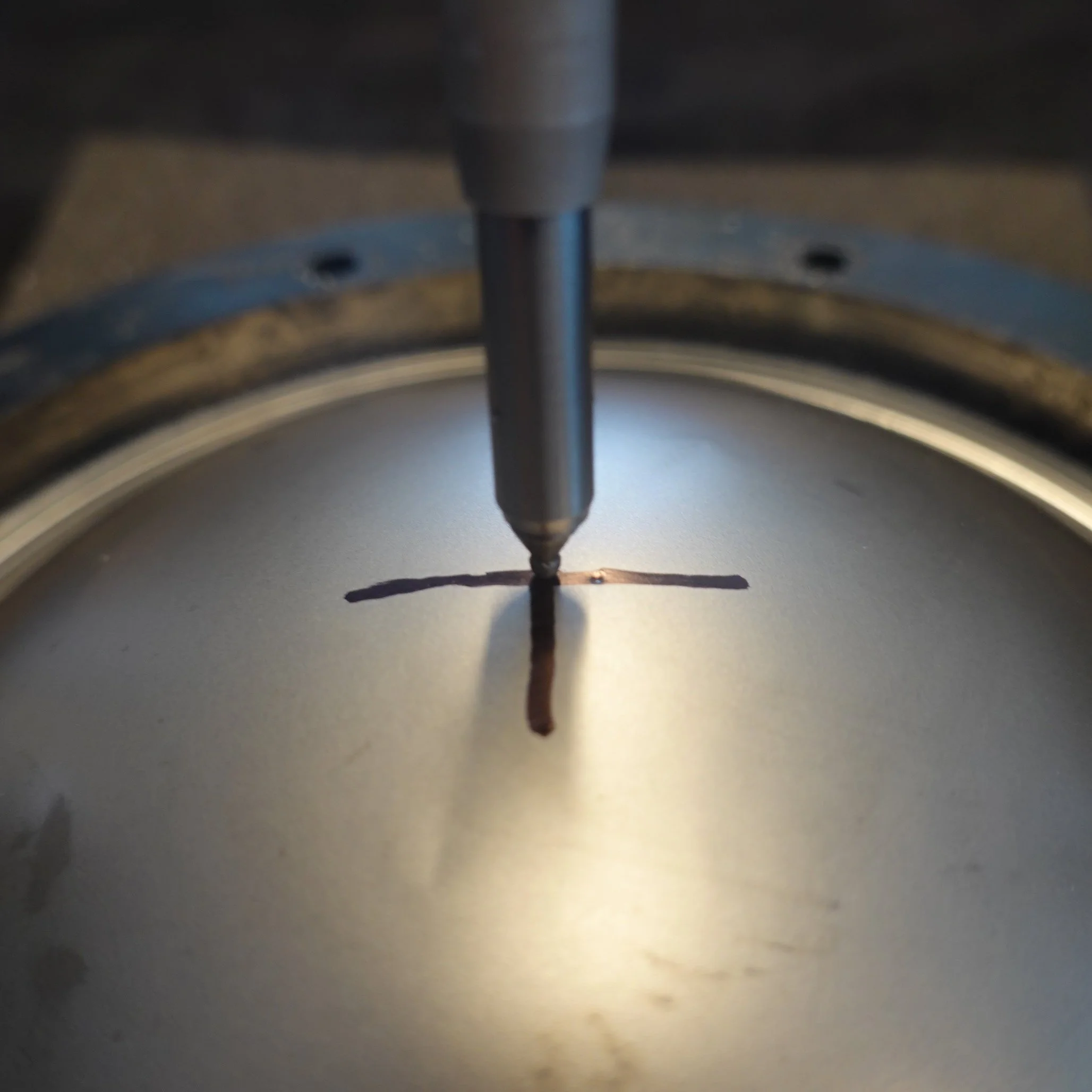
smartphone housing, drone gyroscope sensor, electronics board, loudspeaker cone, coffee grinder components,…
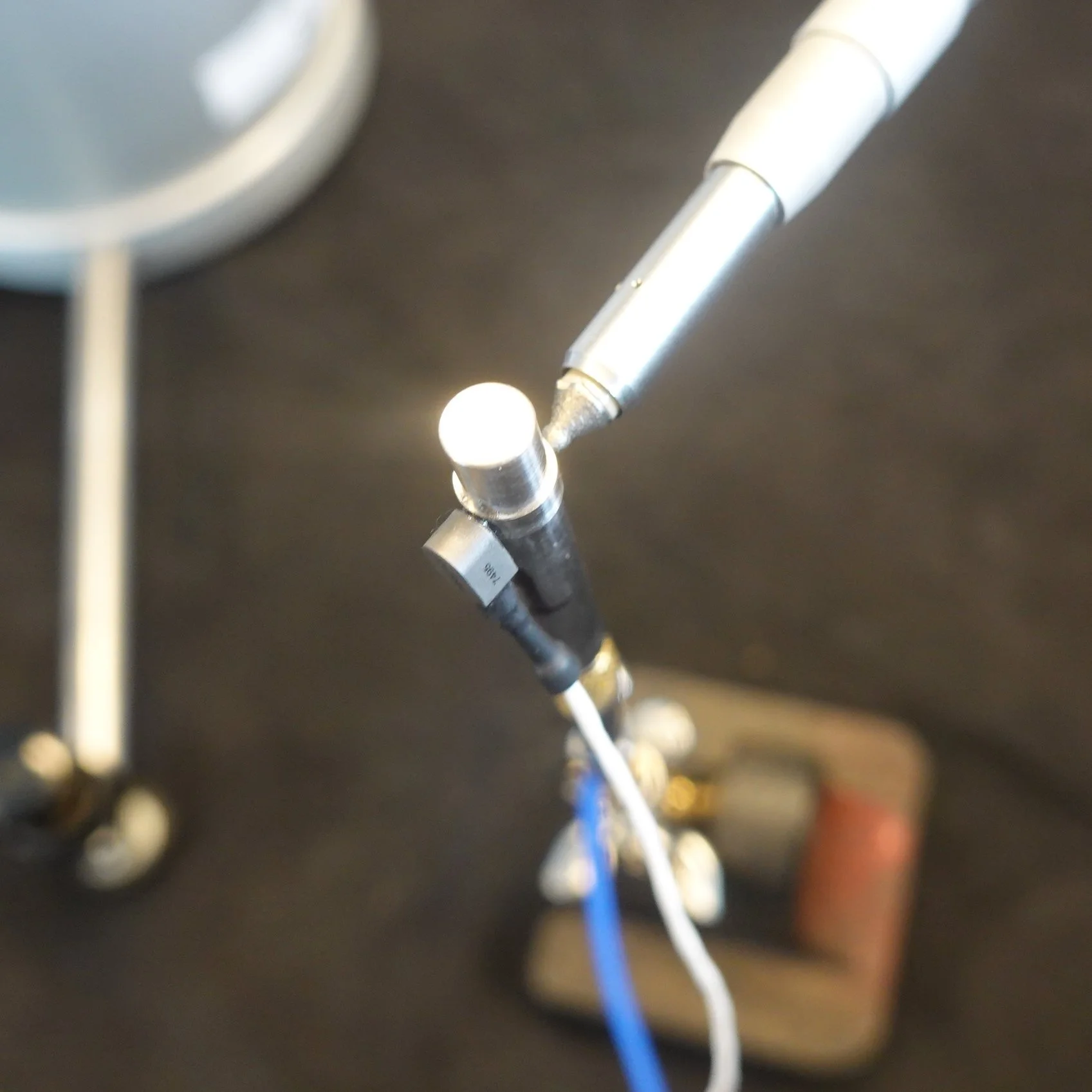
The patented floating piston has the force sensor integrated, evading mass loading of the test-object and the object can be excited at any inclination.
The exciter can be driven in fixed frequency, sweep and random mode. This allows fast averaging and very fast surface scanning in combination with optical scanning. Force signal crest factor is much lower than typical impact devices, but higher than typical shakers. Signal processing is performed in the same way as shaker measurements.
The new solution in artificial excitation: Qikk
high accuracy on the smallest test-objects
Features
Minimal object contact time, with a tiny exciter mass
Well reproducing and directional accurate excitation in any inclination
Integrated force sensor
Patented floating piston solution
Allows random, sweep, and fixed frequency excitation
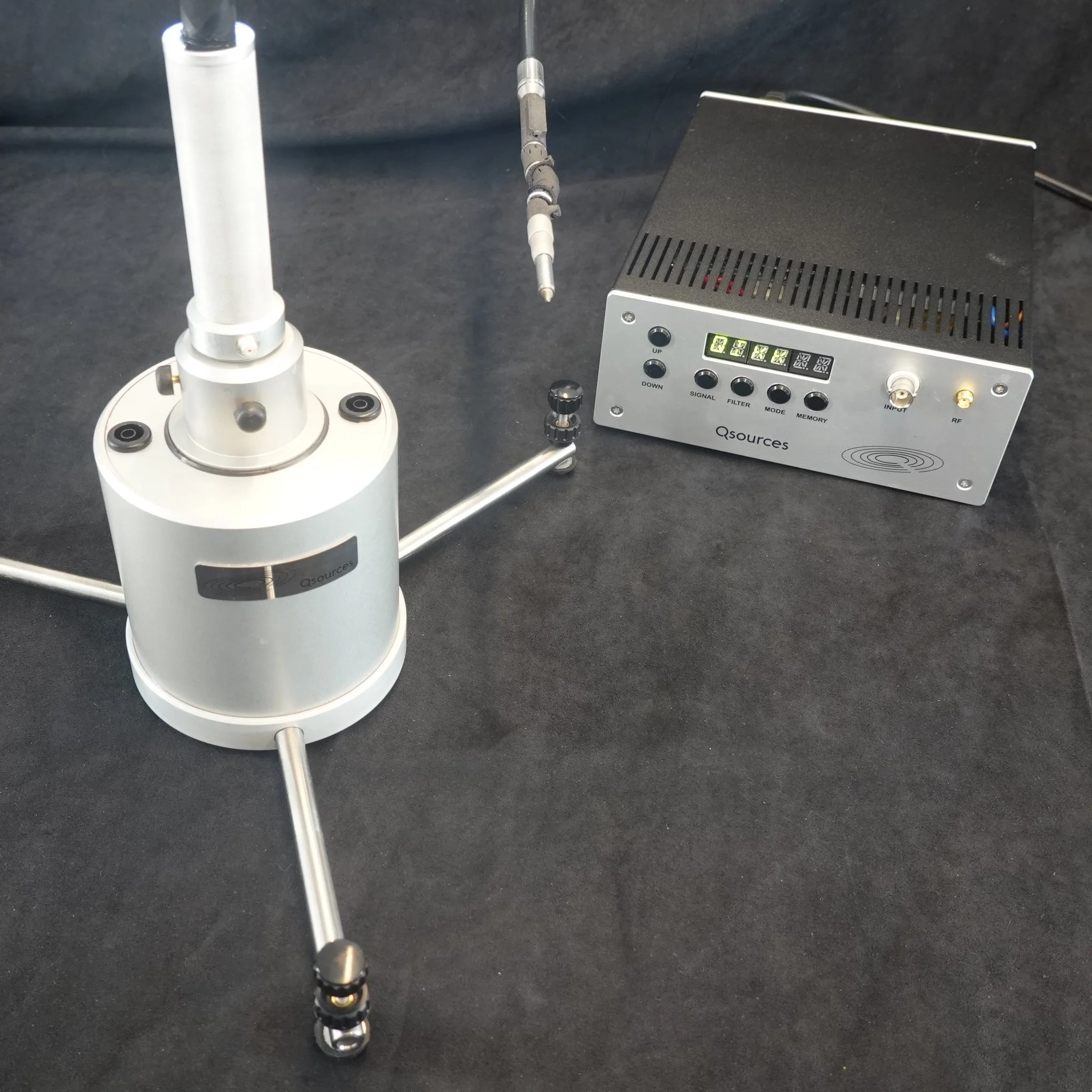
Flexible narrow design, and swivel head, for easy access
Minimal shading for optical scanning measurements
Dedicated amplifier available with extensive
electrical mechanical and thermal protections, for easier use
Measurement techniques
Experimental Modal Analysis
Transfer Path Analysis (incl. blocked forces)
Frequency based sub-structuring (incl. blocked forces)
Inverse source or load identification
Statistical Energy Analysis and equivalent
Numerical CAE model correlation and improvement
Main characteristics
Contact area diameter 1.0 mm
Diameter above the test-object 5.6 mm
Core frequency range 100-14000 Hz
Extended frequency range 50- 22000 Hz
Typical test-object mass 1 gram to 1.5 kg
Equivalent coupled mass; 3 milligrams
Time averaged, 0.2 N RMS force level
Multiple short time, 40 N peak force
Availability
The Qsources Qikk exciters are marketed in co-operation with HEAD acoustics, and our other partners.







*What is core frequency range?
If a highest level of accuracy is essential it is advised to remain within the core frequency range. The force sensor is in its constant sensitivity range, the signal processing is less critical, and the excitation levels are easy to achieve.
**What is extended frequency range?
In the extended frequency range there is a higher risk, due to alignment sensitivity and signal processing sensitivity. The highest frequencies also require a hard, high stiffness, contact zone on the test-object for a sufficient level of force.